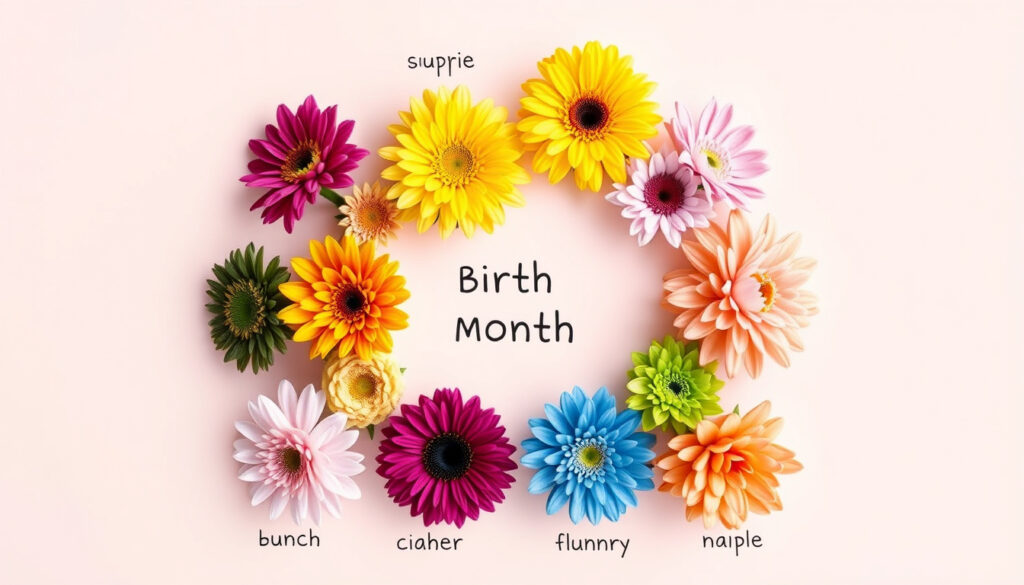
Birth Month Flowers: Complete List and Meanings
There’s something quietly personal about a flower tied to the month you were born—a bloom that seems to carry a piece of your own story, yet conflicting lists and dual flowers often cause confusion. This guide walks through the most widely used list, explains why some months have a backup bloom, and digs into the Victorian tradition that started it all.
Total birth month flowers: 24 ·
Months with two flowers: 12 ·
Oldest recorded birth flower list: 19th century ·
Most popular birth flower: Rose (June) ·
Language of flowers origin: Victorian era
Quick snapshot
- No single global “official” birth flower list exists – Britannica (encyclopedia reference)
- Victorian “language of flowers” popularized assigned meanings in the 19th century – Floraly Journal (lifestyle publication)
- All 12 months have a primary and a secondary flower in the tradition popularized by Gardenia.net (horticultural resource)
- Whether any official standard for birth month flowers exists – Simple & Dainty (lifestyle publication)
- Origin of the phrase “which flower is 12 months?” – unknown (Simple & Dainty (lifestyle publication))
- 1830s–1900: Victorian floriography assigns meanings to flowers – Britannica
- Early 1900s: First formal birth flower lists appear in horticultural publications – Gardenia.net
- 1950s–present: The Old Farmer’s Almanac popularizes the dual-flower system – Simple & Dainty
- Growing trend: birth flower tattoos as personalized body art
- Use in wedding bouquets and gifts continues to rise
| Fact | Value |
|---|---|
| Total unique flowers | 24 |
| Months with two flowers (Almanac) | 12 |
| Oldest known birth flower list | Victorian era (19th century) |
| Most popular birth flower globally | Rose (June) |
| Primary authority cited | The Old Farmer’s Almanac |
What are the official flowers for each birth month?
Twenty-four flowers assigned across twelve months, one pattern: each month carries a primary bloom and a secondary alternative rooted in the same symbolic tradition. Below is the most commonly cited dual-flower list, drawn primarily from Gardenia.net (horticultural resource) and Simple & Dainty (lifestyle publication).
| Month | Primary flower | Secondary flower | Meanings |
|---|---|---|---|
| January | Carnation | Snowdrop | Fascination, distinction, innocence |
| February | Violet | Primrose | Love, faithfulness, modesty |
| March | Daffodil | Jonquil | Rebirth, new beginnings, optimism |
| April | Daisy | Sweet Pea | Purity, innocence, blissful pleasure |
| May | Lily of the Valley | Hawthorn | Sweetness, hope, humility |
| June | Rose | Honeysuckle | Love, romance, passion |
| July | Larkspur | Water Lily | Openness, dignity, purity of heart |
| August | Gladiolus | Poppy | Strength, remembrance, imagination |
| September | Aster | Morning Glory | Love, patience, affection |
| October | Marigold | Cosmos | Creativity, passion, harmony |
| November | Chrysanthemum | Peony | Optimism, honor, prosperity |
| December | Holly | Narcissus | Hope, good will, renewal |
The implication: there’s no single correct answer. The flower assigned to your birth month depends on which tradition a source follows. Most modern guides, however, lean on the dual-flower system popularized by Britannica (encyclopedia reference) and Gardenia.net.
Are there two birth month flowers?
Which months have two flowers?
Every month has two flowers in the tradition widely published by Gardenia.net (horticultural resource) – a primary and a secondary. Some older or simpler lists assign only one, but the dual-flower format has become the norm online.
Why are there two flowers for some months?
The dual-flower system has roots in Victorian floriography, where multiple flowers might carry similar meanings. Over time, different cultures and regional gardens added secondary choices. The Gardenia.net guide notes that the secondary flower often blooms later in the month, giving people born late in the month a second option.
The pattern: what looks like inconsistency is actually a sign of the tradition’s organic growth—no one authority controls birth flowers, so multiple blooms coexist.
What is the 3:5:8 rule for flowers?
What does 3:5:8 mean in flower arranging?
The 3:5:8 ratio comes from the Fibonacci sequence, a mathematical pattern found throughout nature. In floral design, it refers to the proportional relationship between the height, width, and depth of an arrangement. According to Wikipedia (encyclopedia reference), the Fibonacci sequence (1,1,2,3,5,8,13…) has been used in art and architecture for centuries to create visually pleasing proportions.
How to apply the 3:5:8 rule?
To apply the 3:5:8 rule in a bouquet, imagine the container’s height as the unit. The tallest flower should stand 5 to 8 units above the rim, the widest part should be 3 to 5 units across, and the depth should follow a similar ratio. This creates harmony that feels natural. Gardenia.net (horticultural resource) suggests using this rule when arranging birth month flowers for a visually balanced display.
For someone building a birth month bouquet, the 3:5:8 rule turns a random handful of stems into a composition that looks intentional and professional.
The takeaway: the 3:5:8 rule connects birth flowers to a broader artistic tradition, making it more than just a list of blooms—it’s a design principle you can use at home.
Which flower is 12 months?
Is there a single flower that represents all 12 months?
No single flower officially represents all twelve months. Britannica (encyclopedia reference) makes clear that birth month flowers are assigned per month, and no universal “year flower” exists in the standard lists.
What does ’12 months’ refer to in this context?
The phrase “which flower is 12 months” sometimes appears in keyword searches and likely reflects a misunderstanding. It might refer to the idea of having a birth flower for each of the twelve months—not a single flower that covers the entire year. No major source recognizes a multi-month flower.
The catch: this question is essentially a null result—there is no such flower, but the confusion itself tells us how popular birth flower searches have become.
What is the September birth flower?
September primary flower: Aster
Aster is the primary September birth flower. According to Gardenia.net (horticultural resource), aster symbolizes love, patience, and elegance. Its star-shaped blooms appear in late summer and early fall.
September secondary flower: Morning Glory
Morning glory serves as the secondary September flower. Gardenia.net notes that morning glory represents affection and unrequited love. Its vivid blue or purple blossoms open in the early morning.
Aster is easy to find in florist shops; morning glory is more delicate and short-lived. For a lasting September birth flower, aster is the safer choice.
What this means: if you’re a September birthday, you can choose between the sturdy aster and the ephemeral morning glory, each with its own symbolic weight.
What are popular birth month flower tattoo ideas?
Tattoo design ideas for each month
Birth month flowers have become a popular motif for tattoos, with design styles ranging from single-stem line art to watercolor bouquets. Gardenia.net (horticultural resource) notes that each flower carries specific meanings, which can inform the design. Common placements include the wrist, shoulder, and ankle, allowing for small, discreet pieces.
Combining birth flowers with other symbols
Many people combine their birth flower with other personal symbols—names, dates, or complementary blooms from family members. The aesthetic flexibility of flowers (from delicate fine-line to bold traditional) makes them adaptable to any tattoo style.
For collectors, the growing trend means more flash designs and artist expertise, making it easier to find a tattooist who specializes in botanical work.
Timeline of birth month flowers
Three periods define how we arrived at today’s birth flower lists.
- 1830s–1900: Victorian “language of flowers” craze assigns hidden meanings to blooms. Books like Le Langage des Fleurs popularize the idea that flowers can send secret messages. Britannica (encyclopedia reference) traces birth flower roots to this era.
- Early 1900s: First formal birth flower lists appear in horticultural publications and almanacs, often assigning a single flower per month.
- 1950s–present: The Old Farmer’s Almanac and later online databases like Gardenia.net popularize the dual-flower system, giving each month a primary and secondary bloom.
The pattern: what started as a Victorian parlour game became a full-blown cultural tradition through the power of print and later the internet.
Certainty vs. uncertainty
Confirmed facts
- The Old Farmer’s Almanac lists two flowers per month
- The 3:5:8 proportion derives from the Fibonacci sequence
- September primary flower is Aster, secondary is Morning Glory
- Victorian floriography is the direct historical predecessor
What’s unclear
- Whether an official global standard for birth month flowers exists
- Origin of the search query “which flower is 12 months?”
- Exactly when the dual-flower system became mainstream
- How much regional variation exists in the lists
“The history of birth month flowers is ambiguous. Some sources trace the tradition as far back as ancient Rome.”
— Britannica (encyclopedia reference)
“Carnations symbolize fascination and distinction. Snowdrops represent innocence and purity.”
— Gardenia.net (horticultural resource)
For a hobbyist growing their own birth flower garden, the choice between primary and secondary blooms depends on climate, meaning, and aesthetic. The key is to consult a Simple & Dainty (lifestyle publication) style guide for the most commonly accepted pairings.
The reader interested in Fruits of the Spirit: Full List, Meaning, and Bible Verses may also appreciate botanical symbolism that carries personal significance.
For practical skincare uses of natural ingredients, Paw Paw Ointment: Uses, Benefits, Safety & Ingredients offers a botanical-adjacent read.
For a comprehensive list of each month’s primary and secondary blooms, see this detailed birth month flowers guide with meanings and floral design tips.
Frequently asked questions
What is my birth flower if I was born in March?
March’s primary birth flower is the daffodil, symbolizing rebirth and new beginnings. The secondary flower is the jonquil. Both are associated with optimism and spring. Gardenia.net confirms these pairings.
Can I have more than one birth flower?
Yes. Most modern lists assign two flowers per month. You can choose either or both to represent your birth month. Some sources also include zodiac-based flowers. Britannica notes that no single official list exists, giving you flexibility.
What is the birth flower for a leap year?
Leap year (February 29) does not have its own flower. Most people born on February 29 choose either February’s flowers (violet and primrose) or March’s (daffodil and jonquil) based on personal preference.
How are birth flowers different from birthstones?
Birth stones are gemstones assigned to each month, while birth flowers are blossoms. Both traditions have ancient roots, but birth flowers are often considered more accessible and can be grown, gifted, or tattooed.
Is there a birth flower for each zodiac sign?
Some holistic sources assign flowers to zodiac signs, but this is separate from the month-based birth flower system. The mainstream birth flower tradition follows the calendar month, not astrological signs.
What is the most common birth flower?
June’s rose is the most recognized birth flower globally, appearing in every major source. It symbolizes love and passion, making it a popular choice for gifts and tattoos.
How do I use birth flowers in a wedding bouquet?
Include your own and your partner’s birth flowers in the bouquet. Follow the 3:5:8 rule for balanced arrangement. Gardenia.net suggests blending primary and secondary flowers for a layered look.
More related posts
 Billy Idol: Biography, Sobriety, Family, and Hits
 Mini Dachshund: Are They a Good Pet? Pros, Cons, Cost in Ireland
 CHF to AUD: Exchange Rate, Forecast & Swiss Franc vs AUD
 Rafe Cameron Guide: Actor, Mental Health & Arc
 Inches to Centimetres – Exact 2.54 cm Chart and Guide
 Beetlejuice: Real Name, Condition, and Catchphrase Explained
 Mike White: Net Worth, White Lotus, Survivor & Personal Life
 MacKenzie Scott: Biography, Philanthropy, Net Worth, Divorce, Children