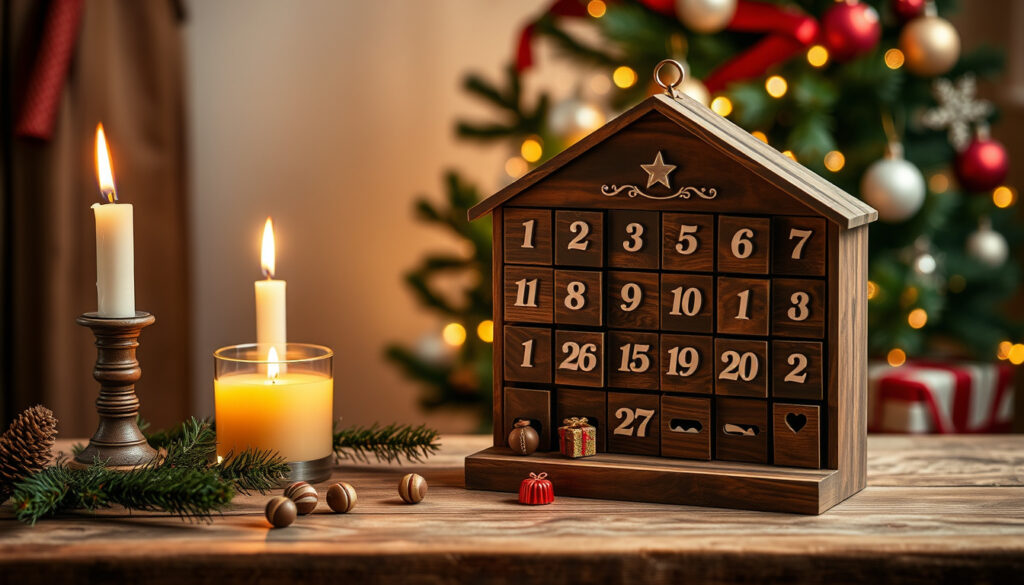
Advent Calendar Guide: History, Contents & Rules
There’s something about peeling open a tiny cardboard door each December morning that feels like a small ritual of anticipation. Whether it’s a square of chocolate, a miniature perfume, or a Bible verse, the Advent calendar has quietly transformed from a Lutheran teaching tool into a global unboxing phenomenon. This guide traces that journey, separates the religious rules from the commercial ones, and helps you pick the right countdown for your Christmas season.
Modern Advent calendar origin: 19th-century Germany (hand-drawn or DIY) ·
First mass-produced Advent calendar: 1908 by Gerhard Lang (Munich) ·
Average price range (beauty calendars): €50–€300 (luxury brands) ·
Advent season length: 22 to 28 days (Nov 27–Dec 24 depending on year)
Quick snapshot
- Advent calendar tradition started in 19th-century Germany (Encyclopaedia Britannica – reference work)
- First printed calendar by Gerhard Lang in 1908 (Williams Sonoma – retailer heritage site)
- No universal ’12 days of Advent’ rule – Advent is a 4-Sunday season (Encyclopaedia Britannica)
- Exact date of first ‘beauty’ calendar (likely 2010s, not documented)
- Whether Catholics observe any fasting in Advent (depends on diocese)
- First hand-drawn/chalk calendars in German Lutheran homes: early 1800s (Lourdes Giftshop – religious goods retailer)
- Beauty/luxury ‘adult’ calendars dominate Irish and UK retail (2025 season) (Boots Ireland – pharmacy chain)
Four rows that capture the essential specs at a glance – the journey from homemade chalk to high-end retail.
| Feature | Detail |
|---|---|
| First commercial calendar | 1908 (Gerhard Lang) |
| Advent duration | 22–28 days |
| Common content today | Chocolate, skincare, fragrance, small toys |
| Price range (beauty) | €50–€300 |
What is an Advent calendar used for?
Modern countdown purpose (daily gift or treat)
- Advent calendar marks the 24 days before Christmas (Dec 1–24) (Encyclopaedia Britannica – reference work)
- Today used for both religious reflection and secular gift-giving (Encyclopaedia Britannica)
In households across Ireland and the UK, the morning door-open has become as routine as the first cup of tea. The appeal is the controlled surprise – a small moment of joy embedded in the December rush.
Religious origin as a symbol of waiting for Christmas
- Originated in 19th-century Lutheran households as a chalk-door or paper calendar (Pinot’s Palette – craft blog)
- Intended to prepare spiritually for the Nativity (Encyclopaedia Britannica)
The implication: what began as a devotional tool has become a cultural hybrid – still carrying echoes of waiting, but now packaged as daily consumer delight.
What is in an Advent calendar?
Typical contents: chocolate, beauty samples, small toys, spiritual cards
- Traditional calendars hold chocolate sweets or small religious images (Encyclopaedia Britannica)
- Modern calendars (especially ‘adult’ and ‘beauty’) contain skincare, perfume, makeup, or wellness items (Boots Ireland – pharmacy chain)
Luxury vs budget calendars (size, quantity, brand)
- Average beauty calendar has 12–24 daily doors with 1–3 items each (Boots Ireland)
- Price range €50–€300 for beauty/luxury (Brown Thomas – Irish luxury retailer)
What this means: the market has split into two clear tiers – affordable chocolate/trinket calendars for children and high‑stakes beauty offerings for adults, with the latter commanding premium price tags and generating enormous retail buzz.
History of the Advent Calendar: A Christmas Countdown Tradition
19th-century German roots
- First known Advent calendar: hand-drawn or made from chalk / cloth in early 1800s (Wentworth Puzzles – puzzle retailer)
- German Protestant families marked chalk lines or lit candles to count days to Christmas (Pinot’s Palette)
First commercial calendar (Gerhard Lang, 1908)
- Gerhard Lang produced the first printed calendar in 1908 with 24 doors (Williams Sonoma – retailer heritage site)
- Lang’s mother reportedly made him a cardboard calendar with 24 tiny sweets (GotQuestions.org YouTube – religious Q&A channel)
Post-WWII revival and global expansion
- After WWII, American and British markets popularised chocolate and beauty versions (Lourdes Giftshop – religious goods retailer)
- The custom waned during World War I due to cardboard scarcity but was revived in 1946 by printer Richard Sellmer (GotQuestions.org YouTube)
The chronology shows a clear pattern: each major economic shift (war, rationing, post-war boom) reshaped the Advent calendar from a handcrafted religious aid into a mass‑produced retail staple that now drives millions in seasonal revenue in Ireland and the UK.
Why is it 12 days of Advent?
Advent vs Christmas season (liturgical difference)
- Advent is a season of four Sundays (22–28 days), not 12 days (Encyclopaedia Britannica)
- The ’12 days of Christmas’ (Dec 25–Jan 5) is a separate period (Encyclopaedia Britannica)
No fixed 12-day rule; varies by church calendar
- Confusion arises from the carol ’12 Days of Christmas’ – not from Advent
The pattern: the modern commercial calendar (1–24 December) has completely overtaken the liturgical season in the public mind. Irish shoppers rarely pause to ask whether their countdown aligns with church dates – and the market doesn’t care.
What is the best Advent calendar to buy?
Adult beauty calendars (Ireland focus)
- Boots No7 beauty calendar – widely available in Irish stores (Boots Ireland – pharmacy chain)
- Brown Thomas luxury beauty calendars – premium brands only (Brown Thomas – Irish luxury retailer)
- Debenhams multi-brand calendar – good value for variety (Debenhams – department store)
Religious / traditional calendars
- Catholicbishops.ie digital Advent calendar – daily prayers and reflections (Irish Catholic Bishops’ Conference – official church body)
- Traditional chocolate calendars – available at most Irish supermarkets (Lidl, Tesco, Dunnes)
The catch: ‘best’ depends entirely on your goal – a beauty fan should spend €100+ on a curated skincare set, while a family looking for daily devotions will find more value in a free digital calendar from the church.
What are the rules of an Advent calendar?
When to open (start Dec 1, not earlier)
- No universal rules: tradition says open one door per day from Dec 1 (Wentworth Puzzles – puzzle retailer)
- Commercially, ‘day’ windows are numbered 1–24, not liturgical dates
Whether to share or keep
- Some families use as a prayer / reflection tool (Irish Catholic Bishops’ Conference)
- Others treat it as a personal treat – no sharing required
Rigid rules don’t exist, but the commercial logic is clear: start on December 1, enjoy one door a day, and don’t expect the contents to match religious Advent dates. Buyers who want a spiritual countdown should specifically seek a devotional calendar.
Religious vs secular expectations
- Secular calendars: chocolate, toys, beauty samples – pure fun
- Religious calendars: Scripture verses, prayers, acts of charity
What this means: the Advent calendar is a blank template – you can fill it with whatever December tradition you want, from Lindt balls to Lenten-style reflection.
What are the 4 gifts of Advent?
Four Sunday themes: hope, peace, joy, love
- Each Advent Sunday has a traditional candle representing a spiritual gift (Irish Catholic Bishops’ Conference)
- The ‘four gifts’ are not a calendar tradition but a liturgical theme
Not to be confused with ‘4 gifts for Christmas’
- Some modern blessing calendars (e.g., Catholicbishops.ie) use these themes
- No relation to the gift-counting approach in the carol
The trade-off: if you’re looking for a religious Advent practice, the four themes give you a weekly focus that goes deeper than any chocolate door can offer.
Traditional vs modern Advent calendar: side‑by‑side
Eight specs that highlight how far the Advent calendar has travelled from chalk mark to luxury unboxing.
| Aspect | Traditional (pre‑1950) | Modern commercial (2020s) |
|---|---|---|
| Origin | 19th‑century German Lutheran homes | Global retail, led by beauty/luxury brands |
| Contents | Bible verses, chalk marks, small religious images | Chocolate, skincare, fragrance, toys |
| Door count | 24 (hand‑drawn or single sheet) | 12–24 doors |
| Price range | Homemade – near zero cost | €10 (chocolate) to €300+ (luxury beauty) |
| Target audience | Children in religious families | Adults (beauty/luxury) and children |
| Religious significance | High – central to Advent preparation | Low – mostly secular |
| Material | Cardboard, chalk, cloth | Cardboard, plastic, wood, magnetic inserts |
| Reusability | Usually disposable (1 season) | Many are reusable (especially wooden ones) |
The pattern: the modern calendar has flipped every original attribute – it’s mass‑produced, adult‑focused, expensive, and almost entirely divorced from the liturgical season it once served.
Upsides
- Builds daily anticipation for children and adults
- Available at every price point (free digital to €300 luxury)
- Versatile – can be religious, chocolate, beauty, or DIY
Downsides
- Commercial calendars often start Dec 1, not liturgical Advent
- Beauty calendars can be expensive and generate unnecessary consumption
- Some calendars contain low‑value sample sizes for high prices
Timeline: key milestones
- Early 1800s: First hand‑drawn / chalk Advent calendars in German Lutheran homes (Wentworth Puzzles)
- 1908: Gerhard Lang produces first printed calendar with 24 doors (Williams Sonoma)
- Post‑1950: Chocolate Advent calendars become mass‑market in Europe (Lourdes Giftshop)
- 2015–2025: Beauty / luxury ‘adult’ calendars dominate Irish and UK retail (Boots Ireland)
Why this matters: each milestone represents a shift in who the calendar is for – from religious families to children to adult beauty consumers. The latest phase is the most profitable and the most detached from the original Christian meaning.
What’s confirmed and what’s unclear
Confirmed facts
- Advent calendar tradition started in 19th‑century Germany (Encyclopaedia Britannica)
- First printed calendar by Gerhard Lang in 1908 (Williams Sonoma)
- No universal ’12 days of Advent’ rule – Advent is a 4‑Sunday season (Encyclopaedia Britannica)
What remains unclear
- Exact date of first ‘beauty’ calendar (likely 2010s, not documented)
- Whether Catholics observe any fasting in Advent (depends on diocese – no universal rule)
Perspectives from the field
“The digital Advent calendar launched on the First Sunday of Advent offers daily prayers and reflections to help the faithful prepare for Christmas.”
— Irish Catholic Bishops’ Conference (official church body)
“The No7 beauty advent calendar is described as the ‘ultimate Christmas countdown’ – a daily treat of skincare and cosmetics.”
— Boots Ireland (pharmacy chain)
These two voices capture the full spectrum: one rooted in tradition, the other in modern retail. The Advent calendar today speaks both languages, and the reader can choose which one to listen to.
Summary
The Advent calendar has completed a remarkable arc: from a handmade Lutheran teaching tool to a mass‑market retail phenomenon that drives millions in December sales across Ireland and the UK. Its power lies in its simplicity – a small daily surprise that builds anticipation whether you’re counting down to Christmas Mass or to unboxing a €150 beauty set. For the Irish consumer, the choice is clear: decide which Advent you are counting down to – the liturgical one of hope, peace, joy, and love, or the commercial one of chocolate and cosmetics – and buy the calendar that matches.
Related reading: **birth month flowers** · **beauty product reviews like The Collagen Co**
För en djupare förståelse av traditionen bakom kalendrar, se vår omfattande guide om adventkalenderns historia och variationer.
Frequently asked questions
What is the purpose of an Advent calendar?
To count down the days from December 1 to Christmas Eve, traditionally as a spiritual preparation but now often as a daily treat.
What kinds of items are typically inside an Advent calendar?
Chocolate, beauty samples, small toys, spiritual cards, or a mix – ranging from budget sweets to luxury skincare.
When did the first Advent calendar appear?
The earliest forms date to early 19th‑century Germany; the first printed commercial calendar was produced by Gerhard Lang in 1908.
Is Advent actually 12 days long
More related posts
 Rachel Zegler: Ethnicity, Snow White Backlash & Feud Rumors
 2026 Haircut for Men: Best Trends vs Timeless Basics
 Nancy Drew: Story, Fame, LGBTQ+ Representation, Cancellation
 Behind Her Eyes Plot Twist: Villain, Body Swap, Ending Explained
 Times Table Chart – Free Printable PDF Guide for Kids
 Jonathan LaPaglia: Why Survivor Fired Him, Doctor & Family
 Miley Cyrus 2025: Face, Health, Eyebrows & Career Updates