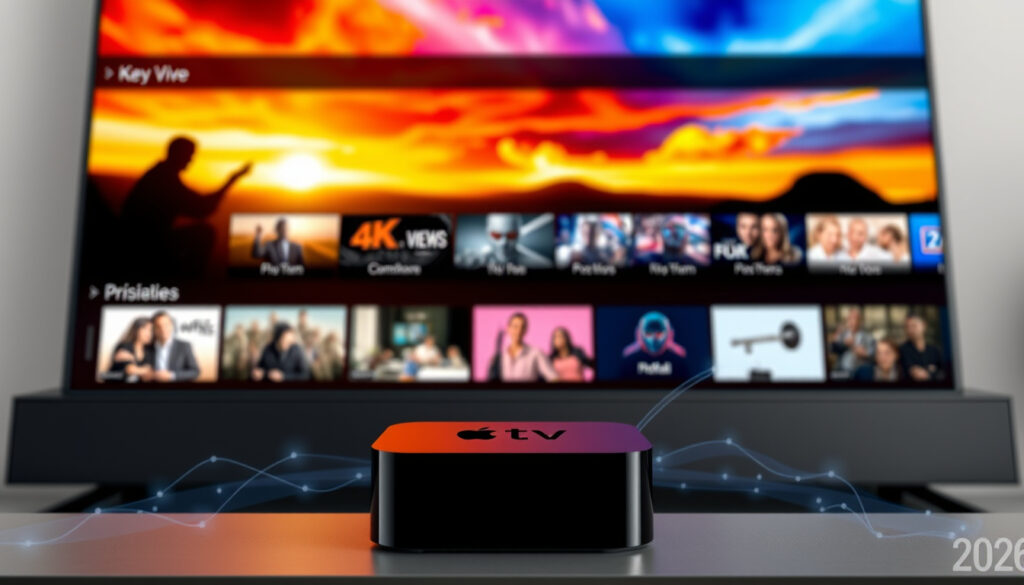
Apple TV 4K: Features, Comparisons & 2026 Rumors
If you’ve been watching streaming content on a Smart TV for the past few years, you might have noticed the apps getting sluggish — a spinning wheel here, a buffering delay there. Meanwhile, the Apple TV 4K has stayed remarkably snappy, and rumors suggest a refresh is coming in 2026. Whether you’re weighing the current model against built-in TV apps or wondering if you should wait for the next generation, here’s what you need to know about Apple’s streaming box.
Annual Apple TV+ Losses: $1 Billion · Storage Options: 64GB, 128GB · Video Support: Dolby Vision, HDR10+ · Audio Support: Dolby Atmos · Current Generation: 3rd Gen (2022)
Quick snapshot
- Dolby Vision, HDR10+, and Dolby Atmos support (MacRumors)
- A15 Bionic chip powering current model since 2022 (MacRumors)
- Apple TV+ reportedly loses $1 billion annually (Gear Patrol)
- 2022: Last Apple TV 4K refresh with A15 chip (Pete Matheson)
- 2025: Anticipated refresh never materialized (Pete Matheson)
- 2026: New model now expected with possible Bluetooth 6 (MacRumors)
- Possible Thread support for smart home integration (Pete Matheson)
- Redesigned Siri Remote reportedly in development (Pete Matheson)
- Stick-style budget model may compete with Fire TV Stick (Pete Matheson)
| Specification | Value |
|---|---|
| Latest Model | 3rd Generation (2022) |
| Video Formats | Dolby Vision, HDR10+ |
| Audio | Dolby Atmos |
| Chip | A15 Bionic |
| Apple TV+ Losses | $1B per year |
What does Apple TV 4K actually do?
At its core, the Apple TV 4K is a streaming device that brings apps like Netflix, Disney+, and Apple TV+ to any television with an HDMI port. But Apple’s approach goes beyond basic playback — the device emphasizes visual and audio fidelity, integrating tightly with iPhones, iPads, and the broader Apple ecosystem.
Key features
- 4K HDR video output with Dolby Vision and HDR10+ support
- Dolby Atmos for immersive spatial audio
- Siri Remote with voice control and haptic feedback
- Integration with Apple HomeKit for smart home control
- Color calibration via iPhone in under a minute (YouTube)
Audio and video quality
Apple TV averages 25–40 Mbps bitrate for streaming, compared to Netflix, Disney+, and Prime Video’s typical 10–25 Mbps (What Hi-Fi? review). Higher bitrate means less compression artifacts, particularly visible on large displays where lower-quality streams show visible blockiness.
For viewers with high-end TVs, the bitrate advantage translates directly to visible picture quality improvements, especially in scenes with fine detail or subtle gradients.
Smart home integration
Unlike built-in Smart TV platforms, Apple TV 4K works seamlessly with HomeKit, allowing it to serve as a smart home hub alongside Apple devices. You can control lights, locks, and thermostats directly through the device or via Siri voice commands (YouTube demonstration).
The implication: if you’ve already invested in Apple’s ecosystem, the Apple TV 4K acts as a natural extension, pairing instantly with iPhones for setup and leveraging iCloud for seamless content access.
Is there a difference between Apple TV and Apple TV 4K?
Yes, and the distinction matters for future-proofing your setup. The naming reflects both hardware capabilities and target use cases.
Hardware differences
The standard Apple TV (non-4K) maxes out at 1080p Full HD resolution and uses older hardware generations. The Apple TV 4K, by contrast, outputs at 3840 × 2160 resolution and includes the A15 Bionic chip — originally from the iPhone 13 (MacRumors Apple coverage). The newer chip enables high frame rate playback, advanced color processing, and smoother navigation.
| Model | Resolution | Chip | Remote |
|---|---|---|---|
| Apple TV HD | 1080p | A8 | Aluminum Siri Remote |
| Apple TV 4K (3rd gen) | 4K HDR | A15 Bionic | Siri Remote (2022) |
Apple TV vs Apple TV+
These are completely different things. Apple TV+ is Apple’s streaming subscription service, offering original content like Severance and Ted Lasso. Apple TV refers to the hardware device — though the Apple TV app serves as the interface where you access Apple TV+ content alongside Netflix, YouTube, and other streaming apps.
Apple TV app explained
The Apple TV app is available across Smart TVs, streaming sticks, and game consoles, not just Apple’s hardware. It aggregates content from multiple streaming services into one interface. However, running the Apple TV app on Apple TV 4K hardware delivers the performance benefits described earlier — faster loading, no UI lag over time, and higher bitrate streaming.
Buying an Apple TV 4K doesn’t lock you into Apple TV+ — it simply gives you a better platform for whatever streaming services you prefer. The hardware and service are separate decisions.
Is a new Apple TV coming out in 2026?
The current Apple TV 4K hasn’t seen a refresh since 2022, making the 2026 model overdue by Apple’s typical product cycle. Multiple credible sources point to significant changes on the horizon.
Rumored specs
Leaks suggest the 2026 Apple TV 4K may feature an A16 chip with 8GB RAM, Wi-Fi 7 support, and potentially 8K output capability (YouTube leak analysis). Apple Intelligence features may also debut on tvOS, bringing AI-powered suggestions and voice control improvements. Some reports indicate Bluetooth 6 support, which could enable new accessory interactions.
- Rumored chip: A16 with N1 designation
- Rumored RAM: 8GB standard for Apple Intelligence
- Rumored wireless: Wi-Fi 7 and Bluetooth 6
- Rumored features: Built-in camera, smart home hub integration
Expected timeline
Apple originally targeted a 2025 refresh that never materialized (MacRumors report). The delay has now pushed expectations to 2026 — over three years since the current model launched. This extended gap suggests Apple may be planning more substantial changes than a simple spec bump.
Current vs future
For buyers considering a purchase now, the 2022 model remains fully functional and represents solid value if priced appropriately. However, if you can wait, the 2026 refresh promises meaningfully upgraded performance and potentially new use cases like gaming or smart home hub functionality.
The implication: whether you buy now or wait, Apple TV 4K remains the streaming box that outlasts Smart TV software by years.
Why use Apple TV instead of smart TV?
Modern Smart TVs from Sony, Samsung, and LG include streaming apps built directly into the interface. So why would anyone spend extra on a dedicated streaming device? The answer lies in software longevity and consistent performance.
Performance advantages
Smart TV apps often suffer from a degradation problem. Initial performance is decent, but after months of use, apps become sluggish, crash unexpectedly, and require regular restarts (YouTube hands-on comparison). This happens because Smart TV manufacturers prioritize new hardware over maintaining older models’ software.
Apple’s dedicated hardware doesn’t have this problem. The optimized tvOS receives regular updates regardless of how old the device is, and the hardware remains consistent — no hidden CPU throttling or degraded components.
App ecosystem
Apple’s App Store for tvOS offers a curated selection of apps, all optimized for the platform. Smart TV operating systems often feature bloated app stores with poorly optimized third-party applications that drag down the entire experience.
Compatibility
The Apple TV app is available on Sony Bravia TVs, and users have confirmed smooth Netflix playback through this route (AVForums user discussion). However, the experience differs from using dedicated Apple TV hardware — the built-in app doesn’t benefit from Apple’s higher bitrate streaming or the same level of hardware optimization.
Sony Bravia owners with built-in Apple TV app access face a real choice: use the native app for convenience, or add an Apple TV 4K box for superior streaming performance. The hardware upgrade costs around $129–179, but the difference in app responsiveness is noticeable within the first week.
What is better, Netflix or Apple TV?
This comparison actually involves two separate questions: which service offers better content, and which platform delivers that content more effectively. The answers diverge significantly.
Netflix on Apple TV 4K
Netflix works natively on Apple TV 4K, supporting 4K Ultra HD with Dolby Vision and Dolby Atmos on the Premium plan (YouTube streaming comparison). The Premium plan allows streaming on four screens simultaneously, making it suitable for households with multiple viewers.
Installation steps
Getting Netflix on Apple TV 4K takes about three minutes:
- Navigate to the App Store on your Apple TV 4K home screen
- Search for “Netflix” using Siri voice or on-screen keyboard
- Select Netflix from search results and choose “Get” or “Download”
- Open Netflix and sign in with your existing account or start a free trial
Pros and cons
Upsides
- Netflix Premium supports 4K on four screens
- Apple TV hardware delivers higher bitrate (25-40 Mbps vs 10-25 Mbps)
- No app lag over time on dedicated hardware
- Netflix recommendations are more personalized
Downsides
- Netflix costs more than Apple TV+
- Apple TV+ offers cinematic quality over content volume
- Netflix’s recommendation algorithm is widely considered superior
- Apple TV interface lacks multi-user profile features
Netflix’s content library dwarfs Apple TV+, but Apple’s streaming service often produces higher-budget prestige dramas. For families with varied tastes, Netflix’s sheer volume wins. For cinephiles prioritizing production quality over quantity, Apple TV+ often delivers better value.
Apple TV 4K vs Smart TV Netflix
Three factors separate the Netflix experience on Apple TV 4K from Smart TV apps: loading speed, bitrate quality, and long-term performance consistency.
| Factor | Apple TV 4K | Smart TV Netflix App |
|---|---|---|
| App Launch Speed | Instant (YouTube performance test) | Variable, degrades over time |
| Typical Bitrate | 25–40 Mbps (What Hi-Fi? technical analysis) | 10–25 Mbps |
| Long-term Performance | Consistent with updates | Often degrades without updates |
| Setup Complexity | Additional hardware required | Ready out of the box |
The pattern is clear: dedicated streaming hardware like Apple TV 4K maintains its performance edge while Smart TV apps accumulate bloat over time.
Apple TV 4K Specifications
Five years of data points reveal consistent hardware patterns worth understanding before purchase.
| Specification | Apple TV 4K (3rd Gen) |
|---|---|
| Release Year | 2022 |
| Processor | A15 Bionic |
| Storage Options | 64GB, 128GB |
| Video Output | 4K HDR, Dolby Vision, HDR10+ |
| Audio Output | Dolby Atmos, HDMI ARC/eARC |
| Connectivity | Wi-Fi 6, Bluetooth 5.0, Gigabit Ethernet |
| Remote | Siri Remote (USB-C) |
Timeline of Apple TV 4K
Understanding the product’s history helps contextualize why 2026 rumors feel significant.
| Period | Event |
|---|---|
| 2022 | 3rd gen Apple TV 4K release with A15 Bionic (Pete Matheson review) |
| 2025 | Anticipated refresh never materialized |
| 2026 | New Apple TV 4K expected with Bluetooth 6 support (MacRumors Apple roadmap) |
Apple TV averages around 25 to 40 Mbps; Netflix, Disney+ and Prime Video average between about 10 and 25 Mbps.
— What Hi-Fi? (Consumer electronics reviewer)
No lag, no spinning wheels. Compare that to most smart TVs where you tap an app and wait and wait.
— YouTube reviewer (Hands-on comparison)
Apple TV 4K Explained
The Apple TV 4K remains a compelling purchase for viewers who prioritize streaming quality and long-term software support over convenience. Built-in Smart TV apps have improved but still can’t match the consistent responsiveness of dedicated hardware. The 2026 refresh promises meaningful upgrades, but the current model holds its own — especially if you can find it at a discount.
Buyers invested in the Apple ecosystem gain the most: seamless pairing with iPhones, HomeKit hub functionality, and AirPlay streaming combine into a unified experience that Smart TV platforms still can’t replicate.
Related reading: Slow Horses Season 6 · iPhone 16 Pro Ireland: Price, Specs & Buy Guide
youtube.com, youtube.com, youtube.com, youtube.com, youtube.com
The Apple TV 4K delivers top-tier streaming for services like Apple TV+ 2025 subscription details, highlighting 2025 prices alongside exclusive original shows.
Frequently asked questions
Does my Sony TV support the Apple TV app?
Yes, Sony Bravia TVs released since 2019 typically include the Apple TV app pre-installed or available for download from the Google Play Store. The app provides access to Apple TV+ and other content, though it doesn’t offer the hardware-level performance benefits of a dedicated Apple TV 4K box.
Can I use Apple TV on Sony Bravia?
Sony Bravia owners have two options: using the built-in Apple TV app or purchasing dedicated Apple TV hardware. The built-in app works adequately for casual streaming, but reviewers consistently note faster load times and smoother navigation when using Apple TV 4K hardware.
Is there a 5th gen Apple TV 4K?
Currently, only the 3rd generation Apple TV 4K (released in 2022) exists on store shelves. The 5th generation designation appears only in speculation and leaks about future hardware, with no official announcement from Apple confirming its existence.
Is Apple TV losing $1 billion?
According to reporting from Gear Patrol and other publications, Apple TV+ reportedly operates at significant losses exceeding $1 billion annually. This figure reflects heavy investment in original content production rather than any operational inefficiency in the streaming platform itself.
Can I watch Netflix on Apple TV 4K?
Absolutely. Netflix is available on the App Store for tvOS and works natively on Apple TV 4K with full 4K Ultra HD, Dolby Vision, and Dolby Atmos support on the Netflix Premium plan. The streaming experience on Apple TV 4K hardware typically outperforms Smart TV apps due to higher bitrate delivery.
What is the point of an Apple TV 4K?
The Apple TV 4K serves two purposes: it provides a premium streaming platform for accessing services like Netflix and Disney+, and it acts as a hub for Apple ecosystem integration including HomeKit control, iPhone pairing, and AirPlay streaming. For users outside the Apple ecosystem, its main value is consistent, high-quality streaming performance that outlasts Smart TV software.
Is Apple TV+ a better value than Netflix?
Apple TV+ offers a single cheaper subscription with 4K included, but Netflix provides a larger content library with multiple subscription tiers. The Apple TV 4K hardware delivers higher bitrate streaming on any service, while Netflix offers better content recommendations and multiple user profiles. Value depends on whether you prioritize catalog size or per-title production quality.
More related posts
 Get Out: Meaning, Plot Twist, and Why It’s a Must-Watch
 QR Code Reader: Scan Codes on iPhone, Android & Online
 Michelle Keegan: Baby, Ethnicity, Age, Dress Size & More
 10 Things I Hate About You – Plot, Cast, Where to Watch
 Will.i.am Bio, Net Worth, Relationships, and Health Facts
 Tessa Thompson: Biography, Movies, Relationships, and Sexuality
 Best Collagen Supplement Australia: Expert Top Picks
 Life Insurance Australia: Costs, Quotes & Coverage Guide