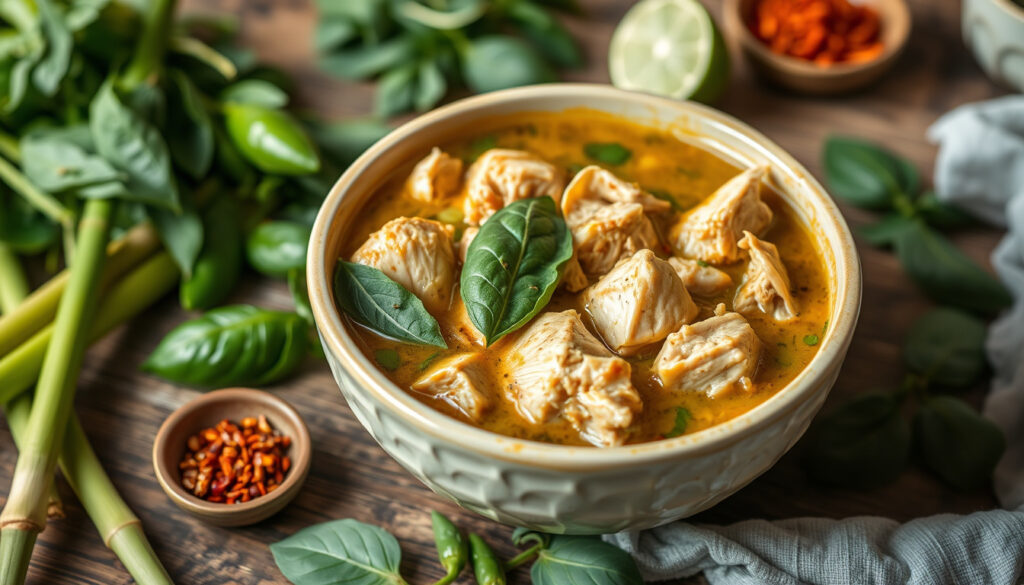
Thai Green Curry: Ingredients, Spice Level & Health Tips
Anyone who has ever taken a spoonful of Thai green curry knows that moment when the creamy, spicy broth hits your tongue — it’s a balancing act of heat, sweetness, and richness. Behind that flavor lies a set of choices that affect both taste and health.
Average cooking time: 30 minutes ·
Typical protein options: Chicken, tofu, shrimp, beef ·
Key spice ingredient: Green chilies in curry paste ·
Coconut milk fat content per can: Approximately 45 g total fat
Quick snapshot
- Curry paste (store‑bought or homemade) provides the base (RecipeTin Eats (trusted recipe blog))
- Coconut milk creates the creamy body (RecipeTin Eats) (RecipeTin Eats (trusted recipe blog))
- Ready in 30 minutes (RecipeTin Eats) (RecipeTin Eats (trusted recipe blog))
- Serves 4 (RecipeTin Eats)
- Contains healthy spices and aromatics like galangal and lemongrass (Non‑Guilty Pleasures (recipe blog))
- Coconut milk is high in saturated fat (NHS guidance on saturated fat)
- Low in carbohydrates when sugar is limited (Well Plated (healthy eating blog))
- Spice varies by paste brand and quantity used (Non‑Guilty Pleasures)
- Fresh green chilies give a sharp heat (Well Plated)
- Generally medium to hot — milder than red curry, spicier than yellow (Cookie and Kate (whole‑foods blog))
- Overcooking vegetables turns them mushy (Non‑Guilty Pleasures)
- Not frying the paste first weakens flavor (RecipeTin Eats)
- Imbalanced salt, sweet, and sour (Cookie and Kate)
Seven key facts about Thai green curry — one pattern: the same core ingredients can yield very different health and taste outcomes depending on how you handle them.
| Fact | Details |
|---|---|
| Curry Paste Base | Green chilies, lemongrass, galangal, kaffir lime, shallots, garlic, coriander, cumin |
| Coconut Milk | 400 ml can typically used |
| Protein | Chicken most common |
| Time | 30 minutes |
| Common Vegetables | Bamboo shoots, bell peppers, Thai basil, broccoli, snow peas |
| Seasoning | Fish sauce (or soy sauce), lime juice, palm sugar |
| Saturated Fat (per can coconut milk) | Approximately 45 g total fat, mostly saturated (NHS) |
What is in a Thai green curry?
Key ingredients
Thai green curry starts with a paste made from fresh green chilies, lemongrass, galangal, kaffir lime leaves, shallots, garlic, coriander root, and cumin (RecipeTin Eats). The paste is fried in oil until fragrant, then coconut milk is added to create a rich, creamy sauce. Additional aromatics like Thai basil and kaffir lime leaves are often stirred in just before serving.
Common protein choices
- Chicken — by far the most common, usually breast or thigh (RecipeTin Eats)
- Tofu or plant‑based proteins — popular in vegetarian versions (Green Healthy Cooking)
- Shrimp or beef — also work well
Essential pantry items
Five ingredients form the backbone: green curry paste, unsweetened coconut milk, a protein, vegetables (like broccoli or bamboo shoots), and fish sauce (Non‑Guilty Pleasures). Sugar is optional but helps balance heat. Lime juice adds acidity at the end rather than during cooking (RecipeTin Eats).
Store‑bought curry pastes vary widely in salt and sugar content. A paste that tastes mild in the jar can become overpowering once simmered. Always taste and adjust before serving.
Mastering these basics ensures a flavorful and balanced curry every time.
Is Thai green curry very spicy?
Heat level comparison with red and yellow curries
Green curry sits in the middle of the Thai spice spectrum. It is generally considered medium to hot, with fresh green chilies delivering a sharp, grassy heat (RecipeTin Eats). Red curry, made with dried red chilies, tends to be hotter, while yellow curry is mildest thanks to turmeric and a lower chili content.
Factors affecting spiciness
- Type of chili in the paste — fresh green chilies are spicier than dried varieties
- Quantity used — more paste = more heat
- Brand differences — some commercial pastes add sugar to mellow the heat (Non‑Guilty Pleasures)
The implication: if you are sensitive to spice, start with two tablespoons of paste and add more to taste. Coconut milk also helps tame the burn.
What are common mistakes when making green curry?
Overcooking the vegetables
Delicate vegetables like broccoli, snow peas, and bell peppers should go in during the last few minutes of simmering. Several recipes warn that overcooking turns them brown and mushy (Non‑Guilty Pleasures).
Using too much or too little curry paste
Start with two to three tablespoons for a standard 400 ml can of coconut milk. You can always add more, but diluting an overly spicy curry later requires extra coconut milk, which adds fat and calories.
Not frying the paste properly
Frying curry paste in oil before adding any liquid is the single most important step. Chef Pailin of Hot Thai Kitchen explains: “The key to a great green curry is to fry the paste in a little coconut cream first, to release the aromatics.” RecipeTin Eats advises cooking the paste until it “mostly dries out” (RecipeTin Eats). Skipping this step results in a flat, raw‑tasting curry.
Balancing salty, sweet, and sour
Thai green curry needs a precise balance. Fish sauce provides salt, palm sugar adds sweetness, and lime juice delivers acidity. Add each component a little at a time, tasting as you go. Cookie and Kate recommends seasoning with rice vinegar and soy sauce after cooking to achieve the right balance (Cookie and Kate).
Avoiding these pitfalls will elevate your curry from mediocre to exceptional.
Can curry lower cholesterol?
Role of curry leaves in cholesterol management
Curry leaves (not to be confused with the dish itself) have been studied for potential cholesterol‑lowering effects. Some animal studies suggest compounds in curry leaves may reduce LDL cholesterol, but human evidence remains preliminary (Harvard Health (academic health publication)). It is not yet clear whether eating curry leaves in the amounts typically used in cooking produces a meaningful effect.
Coconut milk’s saturated fat content
The larger question for cholesterol is coconut milk. A standard 400 ml can contains about 45 g of fat, most of it saturated (NHS). For someone managing high cholesterol, that single serving can cover more than half the recommended daily limit of saturated fat. However, some research suggests that the medium‑chain triglycerides (MCTs) in coconut milk may have a neutral or even beneficial effect on HDL cholesterol (NIH (national research database)).
The pattern: the evidence on coconut milk and cholesterol is mixed. For individuals with elevated LDL, it is prudent to limit coconut milk or use a “lite” version (which still contains saturated fat, just less). A balanced diet — rich in fiber from vegetables, whole grains, and legumes — remains the cornerstone of cholesterol management.
Understanding the role of coconut milk helps you make informed dietary choices without sacrificing enjoyment.
Is Thai curry ok for diabetics?
Carbohydrate content in Thai green curry
Thai green curry is naturally low in carbohydrates when made with limited sugar. The paste, coconut milk, and vegetables contribute minimal carbs. A typical serving of curry (without rice) contains about 10–15 g of carbohydrates (Diabetes UK (charity diabetes guidance)).
Impact of coconut milk and sugar on blood glucose
Coconut milk adds fat and calories but not carbs. The bigger issue for blood sugar is any added sugar — some recipes call for a tablespoon or more of palm sugar. Store‑bought pastes may also contain added sugar. For diabetics, the American Diabetes Association recommends limiting added sugars and focusing on non‑starchy vegetables (American Diabetes Association (professional medical body)).
Portion control and pairing with vegetables
Pairing curry with a generous portion of vegetables and a modest serving of jasmine rice (or cauliflower rice) helps keep the meal balanced. The fat from coconut milk can also slow glucose absorption, but the overall meal composition matters more than any single ingredient.
Why this matters: for a person with type 2 diabetes, a well‑constructed Thai green curry can be a blood‑sugar‑friendly meal — provided the sugar is minimized and the serving size of rice is controlled.
Reducing coconut milk lowers saturated fat but also reduces creaminess. For diabetics who also manage weight, using light coconut milk and extra vegetables strikes a practical balance between flavor and health goals.
With mindful preparation, Thai green curry can fit into a diabetic-friendly meal plan.
Step‑by‑Step: How to make Thai green curry
- Prepare the ingredients
- 2–3 tablespoons green curry paste
- 1 can (400 ml) unsweetened coconut milk
- 300 g protein (chicken, tofu, or shrimp)
- Mixed vegetables: broccoli, bell pepper, snow peas, bamboo shoots
- Fish sauce, palm sugar (or brown sugar), lime juice
- Fresh Thai basil and kaffir lime leaves (optional)
- Cook the paste — In a wok or deep pan, heat 1 tablespoon of oil over medium heat. Add the curry paste and stir for 1–2 minutes until fragrant and slightly dried out (RecipeTin Eats).
- Add coconut milk and protein — Pour in about half the can of coconut milk — the thick cream that rises to the top. Stir until smooth. Add the protein and cook until nearly done.
- Add vegetables and remaining coconut milk — Pour in the rest of the coconut milk. Add the hardest vegetables first (e.g., broccoli stems, bamboo shoots) and simmer for 3 minutes. Add quick‑cooking vegetables (snow peas, bell peppers) at the very end so they stay bright and crunchy (Non‑Guilty Pleasures).
- Season and serve — Season with fish sauce (or soy sauce for vegetarian), a small amount of sugar, and a squeeze of lime. Taste and adjust — it should be salty, slightly sweet, and sour. Serve over steamed jasmine rice and garnish with Thai basil and sliced red chili. For a lower‑carb option, try chicken and rice one‑pot recipes for inspiration on portion control, or pair with a red wine jus if you want an elegant twist (How to Make Red Wine Jus).
Clarity check
Confirmed facts
- Green curry paste contains green chilies and a blend of aromatics (RecipeTin Eats)
- Coconut milk is high in saturated fat (NHS)
- Frying the paste first improves flavor (RecipeTin Eats)
What’s unclear
- Whether curry leaves effectively lower cholesterol in humans
- Whether coconut milk’s saturated fat universally raises LDL cholesterol in every individual
- Whether Thai green curry is suitable for all diabetics without adjustments
The evidence base supports these confirmed facts, while the unclear areas require further research.
Expert perspectives
The key to a great green curry is to fry the paste in a little coconut cream first, to release the aromatics.
— Chef Pailin from Hot Thai Kitchen (recipe educator)
The NHS advises that high cholesterol can be managed by reducing saturated fat and increasing fiber intake.
greenhealthycooking.com, eatingthaifood.com, rainbowplantlife.com, youtube.com
För den som vill laga rätten från grunden är det värt att lära sig vad som ingår i en autentisk thai green curry-pasta och vilka märken som fungerar bäst.
Frequently asked questions
Is curry good for arthritis?
Turmeric — a spice often found in curry powder (though less common in green curry paste) — contains curcumin, which has anti‑inflammatory properties. Some studies suggest curcumin may reduce joint pain in people with arthritis, but the amounts used in a single serving of Thai curry are unlikely to provide a therapeutic effect (Arthritis Foundation (patient advocacy group)).
What flushes cholesterol out of your body?
Soluble fiber, found in oats, beans, apples, and carrots, binds to cholesterol in the digestive tract and helps remove it. Physical activity and eating unsaturated fats (like those in olive oil and avocados) also support healthy cholesterol levels (NHS).
What is the #1 worst food for your blood sugar?
Sugar‑sweetened beverages are consistently cited as the worst offender. A single 12‑oz soda can spike blood glucose rapidly due to its high sugar content and lack of fiber or protein to slow absorption (American Diabetes Association).
What is the healthiest Thai dish you can order?
Dishes like larb (minced meat salad with lime and herbs), som tam (green papaya salad), and grilled fish with vegetables are typically lower in saturated fat and sugar than coconut‑milk‑based curries. Tom yum soup (a clear, spicy‑sour broth) is another good option (BBC Good Food).
What is the difference between Thai red, green, and yellow curries?
The primary difference is the chili used. Red curry uses dried red chilies (hotter, earthier), green curry uses fresh green chilies (sharp, grassy heat), and yellow curry uses turmeric and less chili (mild, aromatic). All three rely on coconut milk as a base (RecipeTin Eats).
Can I make Thai green curry vegan?
Yes. Substitute fish sauce with soy sauce or tamari, use tofu or chickpeas as protein, and add extra vegetables. Check that your curry paste is vegetarian — some brands contain shrimp paste (Cookie and Kate).
How long does Thai green curry keep in the fridge?
Store in an airtight container for up to three days. The flavors often deepen overnight, but vegetables may soften. Reheat gently on the stove, adding a splash of water or coconut milk if it has thickened.
For home cooks who want a healthier weeknight meal, the choice is clear: control the coconut milk quantity and load up on vegetables, or accept the trade‑off in richness for a lighter dish. Getting the technique right — fry the paste, time the vegetables, balance the seasoning — turns a good curry into one worth making again and again.
More related posts
 Howard Lutnick: Net Worth, 9/11 Survivor, Commerce Secretary
 Adidas Womens Shoes – Best Picks and Sizing Guide
 Renate Reinsve: Biography, Child, Expulsion & Career
 Hells Angels Membership, Patches, and Rules Explained
 Darren Lockyer: Voice, Immortal Snub & Bennett Feud
 Friday Night Funkin: Age Suitability, Autism Theory, Status
 Ken Irvine: Rugby League Legend’s Games, Tries, and Legacy
 Doja Cat: Nationality, Identity, Mental Health Facts