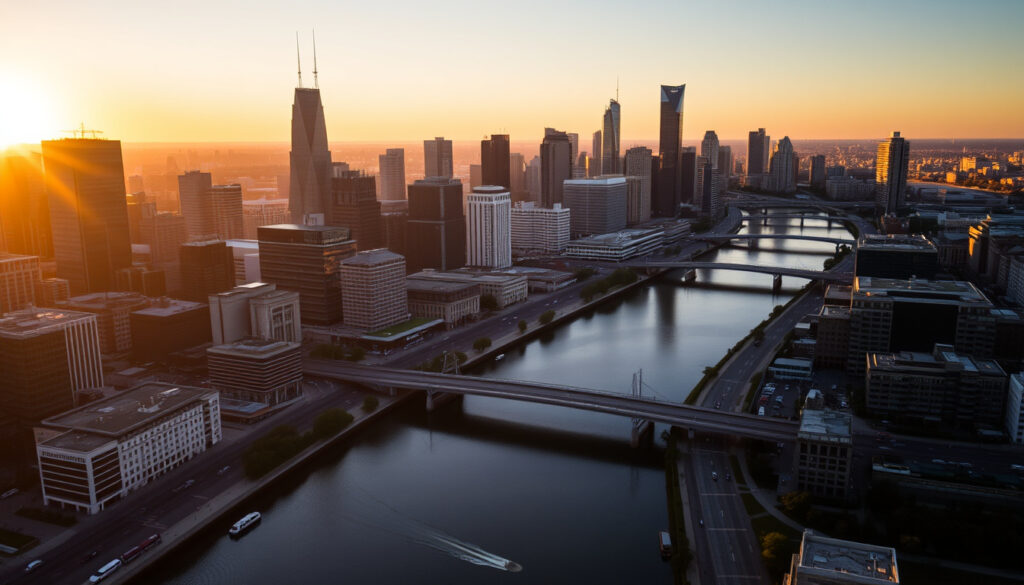
Commercial Real E tate Melbourne: Inve ting Guide & Tip
Few decisions feel as big as buying your first commercial property in Melbourne. Whether you’re a local investor or foreign buyer, the market offers both opportunity and complexity, and this guide answers your top questions using data from JLL (real estate advisory) and KPMG (economic research) along with government sources.
Commercial properties for sale (Melbourne VIC): 689 · Just Commercial cumulative experience: 100+ years · PAA questions answered in this guide: 12
Quick snapshot
- 689 commercial properties listed for sale in Melbourne VIC (realcommercial.com.au (property listings))
- Melbourne leads Australia’s build-to-rent pipeline at 54% of national total (JLL)
- Industrial vacancy rate below 3.5% (JLL)
- Exact average salary of commercial real estate agents in Melbourne (no official published figure)
- Specific suburbs that will boom (depends on upcoming government announcements)
- Whether office demand fully recovers given hybrid work models
- Q1 2025: strong absorption in Melbourne CBD office market (JLL)
- September 2025: first time since June 2023 that all three core asset classes delivered positive returns (KPMG)
- Shopping centre vacancy dropped from 7.4% (Q4 2021) to 4.1% (Q4 2024) (JLL)
- Australia’s commercial real estate market projected to reach USD 70.69 billion by 2031 (Mordor Intelligence (market research))
- 2026 outlook bright, with multifamily and industrial leading (J.P. Morgan (investment bank))
- Foreign investor demand likely to continue as FIRB rules stabilise (Mordor Intelligence (market research))
Six key metrics, one pattern: Melbourne’s commercial property market is recovering unevenly but showing clear strength in industrial and build-to-rent sectors, while office and retail face ongoing adjustments.
| Fact | Value | Source |
|---|---|---|
| Commercial properties for sale (Melbourne VIC) | 689 | realcommercial.com.au (property listings) |
| Just Commercial cumulative experience | 100+ years | Just Commercial |
| Melbourne’s build-to-rent pipeline share | 54% of national | JLL |
| Industrial vacancy rate (Melbourne) | Below 3.5% | JLL |
| Shopping centre vacancy (Q4 2024) | 4.1% (down from 7.4% Q4 2021) | JLL |
| Total returns three core asset classes (Sep Q 2025) | 7.3% | KPMG |
| First positive quarter since June 2023 | September quarter 2025 | KPMG |
| Australia CRE market size (2026) | USD 54.55 billion | Mordor Intelligence (market research) |
| Projected market size (2031) | USD 70.69 billion | Mordor Intelligence (market research) |
| Annual growth rate (CAGR 2026–2031) | 5.32% | Mordor Intelligence (market research) |
Is it wise to invest in commercial property?
What are the risks and rewards?
- Reward: total returns across office, retail, and industrial reached 7.3% in the September quarter 2025, the first positive quarter for all three classes since mid-2023 (KPMG (audit & advisory)).
- Risk: interest rate rises have compressed cap rates, making financing costlier. Melbourne’s office sector still faces uncertainty from hybrid work, though strong CBD absorption in early 2025 was driven by corporate centralisation (JLL).
- Industrial offers the tightest supply: vacancy below 3.5%, fuelled by e-commerce and onshoring demand (JLL).
Current market conditions in Melbourne
Melbourne’s population growth is creating opportunities across build-to-rent (54% of Australia’s pipeline per JLL), industrial, and retail. J.P. Morgan (investment bank) describes the 2026 outlook as bright, with multifamily and industrial leading. The catch: financing costs and regulatory changes remain headwinds. For a buyer in Melbourne, the reward is strongest in industrial and build-to-rent; the risk is highest in older office assets without retrofit upgrades.
The implication: sectors with tighter supply and population tailwinds offer the clearest upside, while office assets will reward selective, well-located purchases.
How much do commercial real estate agents make in Melbourne?
Salary ranges for agents
- No official published average exists for Melbourne, but industry data from recruitment platforms suggests base salaries for commercial agents typically range between AUD 70,000 and AUD 120,000, with top performers earning well over AUD 200,000 through commissions.
- Differences from residential: commercial agents often earn a higher base but rely more on large, infrequent deals. The average commercial agent in Melbourne reportedly closes fewer transactions per year but at higher values than residential counterparts (realestate.com.au (property listings)).
Commission structures
Commissions in Melbourne’s commercial market typically run 1%–3% of the sale price for agency representation, higher for leasing deals. According to Just Commercial (broker network), agencies with over 100 years of combined experience often command premium commissions because they bundle valuation and tenant placement services. The unclear part: exact commission splits between agent and agency are rarely disclosed publicly.
Without a government-published salary figure, relying on job-board averages can mislead – actual take-home pay varies enormously by deal flow. A new agent may earn less than AUD 60,000 in their first year; a veteran selling industrial assets near the airport can clear AUD 300,000.
The pattern: compensation is highly variable and tied to deal volume, so agents targeting high-turnover industrial assets tend to outperform.
What is the biggest problem in commercial real estate?
Interest rates and financing
- Rising interest rates have increased financing costs across all sectors. KPMG notes that the September quarter 2025 was the first time since June 2023 that all three core asset classes delivered positive returns, reflecting the deep impact of the rate cycle.
- Cap rate compression remains a concern, particularly for office assets in secondary locations.
Supply chain and construction issues
Construction delays and material cost inflation have slowed new supply, especially in industrial and build-to-rent. JLL says tight industrial vacancy (below 3.5%) reflects both strong demand and constrained new delivery. The implication: rents are rising faster than operating costs, but only for properties that are already built and leased.
What this means: investors who can secure financing for industrial assets are in a strong bargaining position, while office owners must focus on tenant retention.
What suburbs are expected to boom in Melbourne?
Growth corridors
- The Fishermans Bend urban renewal area, Melbourne’s largest brownfield development, is expected to deliver thousands of residential and commercial lots over the next 20 years (Live in Melbourne (Victorian Government)).
- Suburbs along the new Suburban Rail Loop (Cheltenham, Box Hill, Glen Waverley) will see transport-linked commercial growth, though timelines align with 2030s completion.
- Industrial zones in Truganina, Laverton North, and Craigieburn benefit from proximity to Western Fwy and freight hubs.
Infrastructure projects driving demand
The Metro Tunnel and level crossing removals are reshaping commuting patterns. JLL reports that population growth is creating opportunities across all sectors, but the strongest signals are in suburbs with direct rail access and land availability. The catch: predictions depend on government funding schedules, which can shift. For an investor, the safest bet is a site within 1 km of a new station or freeway interchange.
An investor who bought industrial land in Truganina five years ago saw land values double as e-commerce demand exploded. The same pattern is likely along the Suburban Rail Loop alignment, but only for investors who can hold through the decade-long construction phase.
The catch: these booms are heavily dependent on government infrastructure schedules, so investors should plan for long holds.
Are property prices falling in Melbourne?
Residential vs commercial price trends
- Residential values in Melbourne have softened slightly, with median house prices dropping around 4% in 2024 according to realestate.com.au (property listings). Commercial has been more resilient: total returns of 7.3% in the September quarter 2025 (KPMG) suggest prices are holding, especially in industrial.
- Office transaction volumes have dipped, but prime CBD assets still trade at tight yields (5%–6%).
Current market indicators
JLL notes that shopping centre vacancy dropped from 7.4% in Q4 2021 to 4.1% in Q4 2024 – a clear sign that retail property values are recovering. J.P. Morgan says limited new supply in retail is creating tailwinds. The trade-off: office values in fringe suburbs are under more pressure than prime CBD assets, creating a two-speed market.
Can a foreigner buy a house in Melbourne?
Foreign investment rules for commercial property
- Foreign buyers can purchase commercial property in Australia, but must apply for approval from the Foreign Investment Review Board (FIRB) unless the property is valued under a certain threshold (AUD 8 million for vacant commercial land, AUD 13 million for developed commercial).
- Unlike residential, there is no blanket ban on foreign ownership of commercial real estate. However, stamp duty surcharges apply: in Victoria, foreign buyers pay an additional 8% on top of normal stamp duty for residential property, but commercial rates vary and are generally lower (Live in Melbourne (Victorian Government)).
FIRB approval process
The FIRB application is mandatory for acquisitions above the threshold. Processing takes 30–60 days for standard cases. Foreign investors must also register for Australian Tax Office (ATO) reporting on vacant land. The Victorian Government also imposes annual land tax surcharges on foreign-owned land. The implication: foreign buyers face higher upfront costs and ongoing compliance, but the commercial sector is far more accessible than residential.
What this means: foreign investors should focus on commercial assets to avoid the steep residential surcharge, but must plan for FIRB timelines.
Pros and cons of investing in Melbourne commercial real estate
Upsides
- Strong industrial demand with vacancy below 3.5% (JLL)
- Build-to-rent pipeline 54% of national – early mover advantage
- Total returns recovering: 7.3% in Sep Q 2025 (KPMG)
- Retail vacancy halved since 2021 (JLL)
- Population growth driving long-term demand (JLL)
Downsides
- High financing costs due to interest rate cycle
- Office sector still adjusting to hybrid work (uncertain demand)
- Foreign buyers face FIRB delays and surcharges
- Construction costs up, limiting new supply
- Suburb boom predictions depend on government funding
How to buy commercial property in Melbourne – step by step
- Clarify your goals: Are you after passive income (build-to-rent, net-leased retail) or capital growth (industrial land, development sites)? Your asset type determines location strategy.
- Check your finances: Lenders typically require a 30%–40% deposit for commercial property. Obtain pre-approval from a commercial lender – KPMG notes that rising rates mean stress-tested borrowing capacity at 2–3% above current rates.
- Choose a suburb: Use the growth corridors above (Fishermans Bend, Suburban Rail Loop stops, Western Industrial Belt). Cross-reference with realcommercial.com.au (property listings) for availability.
- Engage a commercial agent: Look for agents with certifications like Certified Practising Valuer (CPV) or membership in the Property Council of Australia. Interview at least two agents – commission rates vary.
- Due diligence: Order a building inspection, zoning check (Vic Planning Schemes), and environmental audit. For foreign buyers, start FIRB application 60 days before settlement.
- Negotiate and settle: Commercial contracts often have longer settlement periods (60–90 days). Include a finance clause and a due diligence condition. Engage a solicitor experienced in Victorian property law.
The pattern: each step builds on the previous, and foreign buyers should lead with FIRB timing.
Confirmed facts vs what’s unclear
Confirmed facts
- 689 commercial properties listed for sale in Melbourne VIC (realcommercial.com.au (property listings))
- Industrial vacancy below 3.5% (JLL)
- Melbourne accounts for 54% of Australia’s build-to-rent pipeline (JLL)
- Shopping centre vacancy fell from 7.4% to 4.1% between Q4 2021 and Q4 2024 (JLL)
- Total commercial returns hit 7.3% in September quarter 2025 (KPMG)
What’s unclear
- Exact average salary of commercial agents in Melbourne (no official data)
- Which specific suburbs will boom – depends on government infrastructure announcements
- Whether office demand fully recovers post-hybrid work
- Future direction of stamp duty surcharges for foreign buyers
The takeaway: investors have solid data on current conditions, but future movements hinge on policy and market shifts.
Expert perspectives
“Melbourne is benefiting from population growth that is creating opportunities across property sectors, including build-to-rent, office, industrial, and retail.”
— JLL research note, What’s driving the Melbourne real estate investment market
“Uncertainty across the three core commercial sectors is at low levels relative to historical norms.”
— KPMG, Commercial Property Market Update, September 2025
“The retail sector is benefiting from limited new supply and good tailwinds.”
— J.P. Morgan, Commercial Real Estate Trends 2026
“Foreign buyers need to apply for FIRB approval and be aware of higher stamp duty costs in Victoria.”
For Melbourne investors, the choice is clearer than it sounds. The industrial and build-to-rent sectors are firing on all cylinders; office and retail require careful location selection. Foreign buyers can enter the market but must factor in FIRB timelines and extra stamp duty. The pattern across all sectors: properties near infrastructure projects perform best. For a first-time investor in Melbourne, the concrete step is to secure financing now, target industrial land in the Western growth corridor, and hold for the long-term growth from population migration and e-commerce expansion.
jonesrealestate.com.au, youtube.com, statista.com, youtube.com
Frequently asked questions
What is the yield on commercial property in Melbourne?
Yields vary by sector: industrial assets generally trade at 5–6%, prime CBD office at 5.5–6.5%, and retail at 6–8%. Data from JLL shows tight industrial vacancy is keeping yields low but capital growth high.
How does the FIRB approval process differ for commercial vs residential?
Commercial property has higher thresholds (AUD 8 million for vacant land, AUD 13 million for developed) and generally faster approval times. Residential sales to foreign buyers are more tightly restricted, especially established dwellings.
What are the stamp duty costs for commercial property in Victoria?
Stamp duty for commercial property in Victoria is calculated on a sliding scale (around 5.5–6% of the purchase price). Foreign buyers pay an additional 8% surcharge on residential, but that surcharge does not apply to commercial transactions – only standard commercial rates apply.
How has work-from-home affected Melbourne office vacancy rates?
JLL reports that Q1 2025 saw strong CBD office absorption driven by corporate centralisation, suggesting the worst of hybrid-work impacts may be over. However, secondary and fringe office spaces are still under pressure.
What is the minimum deposit required for a commercial property loan?
Commercial lenders typically require 30–40% of the purchase price as a deposit, compared to 10–20% for residential. Higher loan-to-value ratios increase interest rates and may require personal guarantees.
Are there any government incentives for commercial property investment in Melbourne?
The Victorian Government offers incentives for build-to-rent projects, including reduced land tax and a 50% waiver on the absentee owner surcharge. Live in Melbourne provides details on the Business Concierge service for foreign investors.
How to calculate ROI on a commercial property in Melbourne?
Subtract annual operating costs (management, rates, insurance, vacancy allowance) from net rental income, then divide by the total purchase price (including stamp duty). Current yields in Melbourne range from 4% (prime office) to 8% (secondary retail). Always stress-test with 2% interest rate buffers.
More related posts
 Chemist Warehouse Mornington: Hours, Phone Number & Location
 CPI Increase 2025: Comparing US, UK, and Ireland Data
 Jetaway Airport Parking: Reviews, Rates & Promo Codes
 Darren Lockyer: Voice, Immortal Snub & Bennett Feud
 Beetlejuice: Real Name, Condition, and Catchphrase Explained
 Anthony Albanese Daughter: Who Is Ingrid Albanese?
 Gerni Pressure Washer – Models, Reviews and Reliability Guide
 James Garner: Love of His Life, Health, and Relationships