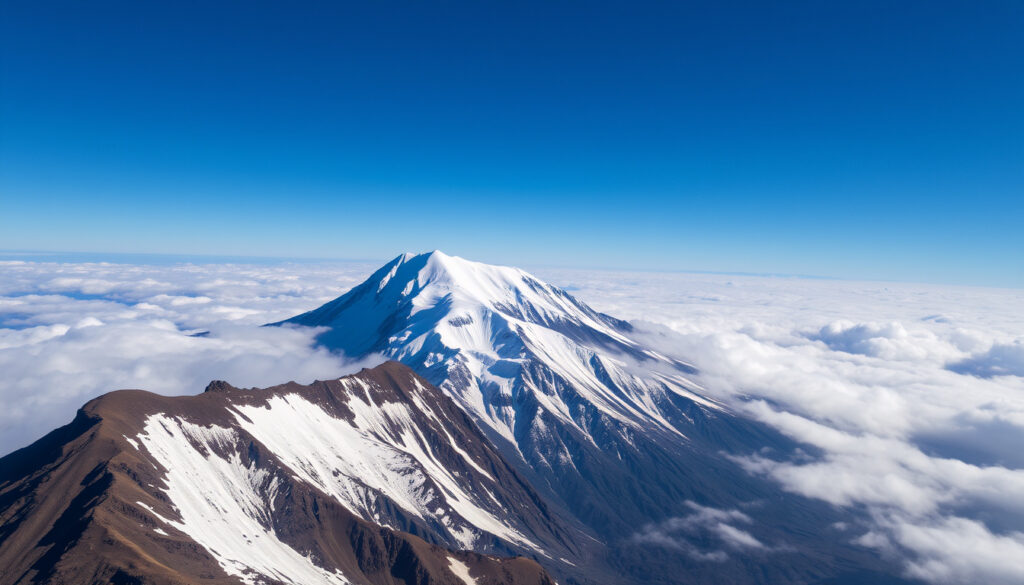
Kilimanjaro Peak: Name, Height, Difficulty & Safety
Few mountains pull in first-time climbers the way Kilimanjaro does — without ropes, ice axes, or technical gear, it promises a summit that anyone with enough grit can reach. Yet beneath that welcoming reputation lies a tangle of real risks: altitude sickness, a death rate that’s hard to pin down, and success rates that vary wildly by route.
Height: 5,895 m (19,341 ft) ·
Location: Tanzania, East Africa ·
First ascent: 1889 by Hans Meyer, Ludwig Purtscheller, Yohani Kinyala Lauwo ·
Highest peak name: Uhuru Peak ·
Climbing success rate: Approximately 65% overall
Quick snapshot
- Uhuru Peak (Ian Taylor Trekking (experienced trekking operator))
- Swahili for ‘Freedom Peak’ (Elite Exped (expedition provider))
- Height 5,895 m (Ian Taylor Trekking)
- Tanzania, East Africa (Ian Taylor Trekking)
- Near the Kenyan border (Ian Taylor Trekking)
- No technical climbing (Elite Exped)
- Requires endurance (Ian Taylor Trekking)
- Altitude serious factor (Elite Exped)
- ~10-15 deaths per year (Climbing-Kilimanjaro.com (guide resource))
- Main risks: altitude, falls, weather (Ultimate Kilimanjaro (operator))
Five key facts about Kilimanjaro, from its volcanic roots to its first recorded ascent:
| Label | Value |
|---|---|
| Highest point | Uhuru Peak (5,895 m / 19,341 ft) |
| First ascent | 1889 by Hans Meyer, Ludwig Purtscheller, Yohani Kinyala Lauwo |
| Country | Tanzania |
| Volcanic status | Stratovolcano, dormant |
| Age | Approximately 750,000 years |
What is the peak of Kilimanjaro called?
Uhuru Peak
- The highest point of Mount Kilimanjaro is called Uhuru Peak, standing at 5,895 metres (19,341 feet) above sea level (Ian Taylor Trekking (trekking operator)).
- It sits on the southern crater rim of the dormant Kibo volcano, one of three volcanic cones on the mountain.
Origin of the name
Uhuru is the Swahili word for “freedom,” chosen after Tanzania gained independence in 1961. The peak was renamed from Kaiser-Wilhelm-Spitze (a colonial-era name) to reflect the country’s new identity.
Elevation and coordinates
The summit coordinates are approximately 3°04′33″S 37°21′12″E. Its elevation has been measured multiple times; the currently accepted figure of 5,895 m comes from a 2008 GPS survey commissioned by the Tanzanian government.
Knowing the exact name and elevation isn’t trivia — it affects route planning, oxygen decisions, and how you prepare for the altitude. Uhuru Peak is the only summit that matters on Kilimanjaro.
Can a beginner climb Kilimanjaro?
Physical preparation
Kilimanjaro is widely described by operators as a non-technical climb that does not require ropes, ice axes, or advanced mountaineering skills on standard routes (Elite Exped (expedition provider)). That makes it genuinely accessible to people without mountaineering experience — but “non-technical” is not the same as “easy.” The challenge is endurance and altitude, not technical gear.
Recommended routes for beginners
- Marangu Route (5 days): The easiest path, with hut accommodation. Success rate lower due to faster ascent.
- Machame Route (6-7 days): More scenic and better for acclimatisation, but requires camping. Often recommended for first-timers who can handle a longer trek.
- Northern Circuit (9 days): Highest success rates, but longer and more expensive.
Overall summit success rates on Kilimanjaro range between 55% and 65% (Ian Taylor Trekking). Longer itineraries generally have higher summit success rates than shorter itineraries (Ian Taylor Trekking). A route-focused source states that the official Kilimanjaro National Park success rate published in 2006 was 45% across routes (Zara Tanzania Adventures (tour operator)). Recent overall success rates are often described as 70% to 80%, varying by route (Zara Tanzania Adventures). The Northern Circuit is identified as the highest-success route.
Training tips
- Build cardiovascular endurance with long hikes, stair climbing, and running.
- Practice hiking with a loaded daypack (10-15 kg) on varied terrain.
- Altitude acclimatisation cannot be trained at sea level; choose a longer itinerary to give your body time.
The 65% overall success rate means roughly one in three climbers does not reach Uhuru Peak. Beginners who underestimate altitude or choose a 5-day route are more likely to turn back. Picking a 7-day route and training seriously are the two biggest factors that tip the odds in your favour.
Which is higher, K2 or Kilimanjaro?
Two very different peaks in very different leagues. K2’s summit elevation is 8,611 metres (28,251 feet) — the second-highest mountain on Earth, after Everest. Kilimanjaro’s summit is 5,895 metres (19,341 feet) (Ian Taylor Trekking). That makes K2 roughly 46% higher.
K2 summit elevation
8,611 m (28,251 ft) — a technical, deadly climb requiring extreme mountaineering skills. As of 2024, around 800 people have summitted K2, compared to tens of thousands on Kilimanjaro.
Kilimanjaro elevation
5,895 m (19,341 ft) — the highest free-standing mountain in the world (meaning it sits alone, not part of a mountain range).
Free-standing vs. mountain range
Kilimanjaro is a stratovolcano rising from the African plateau, so its base-to-summit height is about 5,000 m — massive. K2 is part of the Karakoram range with a base around 4,000 m, so its vertical relief is smaller. For climbers, the difference matters: Kilimanjaro’s isolated height creates its own weather and oxygen challenges, while K2’s range context adds technical ice and avalanche risk.
Comparing K2 to Kilimanjaro is like comparing a marathon to a sprint — both are hard, but one requires oxygen and ice axes while the other only requires strong legs and lungs. Beginners should never conflate the two.
How many climbers died on Kilimanjaro?
Death rate per year
Precise numbers are hard to pin down because Kilimanjaro National Park does not publish a public fatality register. A commonly cited study found 25 tourist deaths over an 8-year period (YouTube – Is Climbing Kilimanjaro Really Dangerous? (analysis by climber researchers)). In that study, ages of deceased tourists ranged from 29 to 74 years, and 17 of the 25 were male, 8 female. The study reports an overall mortality rate of 13.6 per 100,000 climbers, or about 0.0136% — roughly one death per 7,353 climbers. A widely repeated estimate among commercial guides is that Kilimanjaro sees about 3 to 10 deaths per year (Climbing-Kilimanjaro.com (guide resource)). Another guide source states that the annual number of reported tourist deaths is approximately 10, while noting that this may understate the true number of fatalities (Ultimate Kilimanjaro (operator)).
Common causes of death
The study summary attributes 14 of 25 deaths to severe altitude sickness, while 11 were attributed to non-altitude causes such as trauma, heart attack, and pneumonia. Guide sources commonly attribute most Kilimanjaro fatalities to altitude-related illness such as AMS, HAPE, and HACE (Climbing-Kilimanjaro.com).
Safety statistics
One guide source says the Kilimanjaro death rate is about 0.03%, which it contrasts with Everest’s higher fatality rate (Elite Exped). That’s a very low absolute risk — far lower than many everyday activities — but for the unlucky few, the outcome is fatal.
Because there is no official public death register, any specific number you see (10, 13.6 per 100k, etc.) is an estimate drawn from limited academic studies or operator reports. The real figure could be higher or lower. What is not debated: altitude sickness is the number one killer, and longer itineraries reduce that risk.
Do you need oxygen for Kilimanjaro?
Altitude and oxygen requirements
Supplemental oxygen is not required for most climbers on Kilimanjaro. The summit altitude of 5,895 m is below the typical threshold at which oxygen supplementation becomes necessary for healthy climbers. For comparison, Everest’s summit at 8,848 m is in the “death zone” where oxygen is essential. Elite Exped states that Kilimanjaro is accessible to beginners compared with technical alpine peaks, but acclimatisation and pacing remain critical (Elite Exped).
Acclimatisation strategies
- Choose a route with “climb high, sleep low” profile (e.g., Machame, Northern Circuit).
- Take at least 6-7 days to summit (shorter routes increase AMS risk).
- Hydrate well, avoid alcohol, and ascend slowly.
Medical considerations
While you don’t need bottled oxygen, altitude sickness is real. AMS (acute mountain sickness) affects about 50% of climbers above 3,000 m. HAPE and HACE are severe and require immediate descent. Some climbers bring portable oxygen cans for emergencies, but relying on them during the ascent is not recommended.
The upshot: No, you don’t need oxygen to climb Kilimanjaro — but you must respect the altitude. The mountain’s breathing is thin enough to cause serious illness, and the only reliable treatment is descending.
Mount Kilimanjaro Specifications
Six essential specs that define the mountain’s physical character:
| Specification | Value |
|---|---|
| Elevation | 5,895 m (19,341 ft) |
| Location | Tanzania, East Africa |
| First ascent | 1889 by Hans Meyer, Ludwig Purtscheller, Yohani Kinyala Lauwo |
| Volcanic type | Stratovolcano, dormant |
| Age | ~750,000 years |
| Summit name | Uhuru Peak |
Steps to Prepare for Climbing Kilimanjaro
If you’re a beginner eyeing the summit, here is a practical sequence based on advice from operators and experienced trekkers.
- Choose a route and book with a licensed operator. Use a Tanzania-based company registered with the park (Climbing-Kilimanjaro.com). Longer itineraries (7+ days) dramatically improve your success rate.
- Train for 4-6 months with hikes, stair climbing, and cardio. Practice walking with a 10-15 kg pack on hilly terrain.
- Pack layered clothing, a sleeping bag rated to -10°C, and trekking poles. Daypack essentials: water (3L), snacks, sunscreen, and a first-aid kit.
- Arrive in Tanzania a day early to rest and gather gear.
- On the mountain, follow the “pole pole” (slowly, slowly) pace. Hydrate constantly and eat even if not hungry.
- Be ready to turn back if symptoms of severe AMS appear. The mountain will still be there next year.
The same lack of technical difficulty that makes Kilimanjaro accessible to beginners also lulls many into under-preparing physically. The result: a 35% failure rate. Treat it like an endurance event, not a walk, and you’ll stack the odds in your favour.
Confirmed vs. Unclear
Confirmed facts
- Uhuru Peak is the highest point at 5,895 m (Ian Taylor Trekking)
- Kilimanjaro is in Tanzania (Ian Taylor Trekking)
- No technical climbing required (Elite Exped)
What’s unclear
- Exact number of deaths per year (no official public register) (YouTube analysis)
- Long-term glacier melt rate models — estimates vary
Expert Perspectives
“Kilimanjaro is widely described by operators as a non-technical climb that does not require ropes, ice axes, or advanced mountaineering skills on standard routes.”
Elite Exped (expedition provider)
“Overall summit success rates on Kilimanjaro range between 55% and 65%. Longer itineraries generally have higher summit success rates than shorter itineraries.”
Ian Taylor Trekking (experienced trekking operator)
“The annual number of reported tourist deaths on Kilimanjaro is approximately 10, while this may understate the true number of fatalities.”
“The study summary reports an overall mortality rate of 13.6 per 100,000 climbers, or about 0.0136% — roughly one death per 7,353 climbers.”
YouTube – Is Climbing Kilimanjaro Really Dangerous? (climber researcher analysis)
Kilimanjaro is a rare mountain that opens its summit to people without mountaineering credentials — but it demands respect for altitude, physical preparation, and an honest route choice. For a beginner from the UK or elsewhere who is willing to train for months and pick a 7-day itinerary, the odds of standing on Uhuru Peak are well above 70%. For the unprepared who book a 5-day Marangu trip and underestimate the altitude, the mountain will teach a lesson — sometimes a fatal one. The choice is clear: respect the height, plan for the thin air, and treat it as the endurance challenge it actually is.
For a more detailed breakdown of the climb, check out this comprehensive elevation and difficulty guide that covers everything from route options to training tips.
Frequently asked questions
How long does it take to climb Kilimanjaro?
Most routes take 5 to 9 days. The Marangu Route is 5 days, the Machame Route 6-7 days, and the Northern Circuit up to 9 days. Longer itineraries have higher summit success rates.
What is the success rate for climbing Kilimanjaro?
Overall success rates range from 55% to 65% for all climbers (Ian Taylor Trekking). Longer routes see 70-85% success.
Which Kilimanjaro route is easiest?
The Marangu Route is often called the easiest because it has hut accommodation and a gradual profile, but its short length (5 days) gives less time to acclimatise, lowering success rates.
Is Kilimanjaro a volcano?
Yes, it is a dormant stratovolcano with three cones: Kibo (highest), Mawenzi, and Shira.
What should I pack for Kilimanjaro?
Essentials include layered clothing, a sleeping bag rated to -10°C, trekking poles, water bottles/bladder, sunscreen, and a first-aid kit. Daypack: 3L water, snacks, rain jacket.
Do I need a guide for Kilimanjaro?
Yes, by park regulations all climbers must be accompanied by a licensed guide. Solo climbing is not permitted.
What is the best time of year to climb Kilimanjaro?
The best times are January-March and June-October (dry seasons). The long rains (April-May) and short rains (November) are less ideal.
More related posts
 Toxic Shock Syndrome: Symptoms, Causes, and Prevention
 Ladies Denim Shorts: Sales, Fit & Style Guide
 Lancelin Caravan Park: Map, Prices, Reviews & Guide
 Miley Cyrus 2025: Face, Health, Eyebrows & Career Updates
 Adelaide Football Club: Login, Membership, App & More
 Stay Close Netflix: Worth Watching? Plot, Cast, Location
 Thai Green Curry: Ingredients, Spice Level & Health Tips
 Human Resources: Key Roles, Skills & Careers in Ireland