Southern Right Whale – Migration, Habitat and Conservation
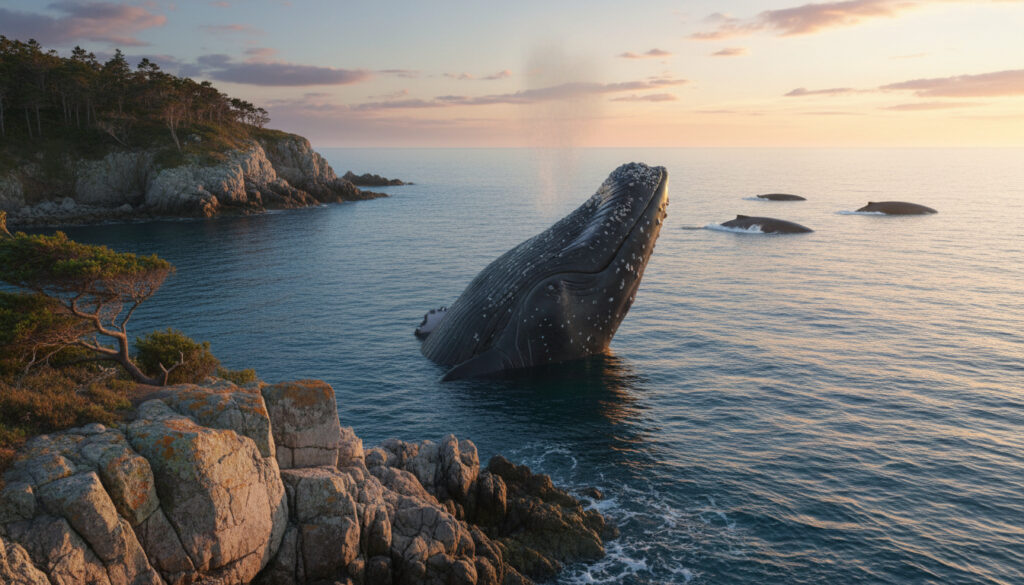
The southern right whale (Eubalaena australis) ranks among the largest mammals on Earth, recognizable by distinctive pale callosities—rough patches of thickened skin crusted with barnacles and whale lice—that mark each individual like fingerprints. These baleen giants undertake one of the most remarkable seasonal migrations in the marine world, traveling thousands of kilometers between Antarctic feeding grounds and temperate coastal nurseries.
Once hunted to the brink of extinction during the industrial whaling era, the species now shows tentative signs of recovery across isolated populations. Yet modern threats from vessel strikes and shifting ocean ecosystems present new challenges for a species that remains classified as endangered throughout its Southern Hemisphere range.
What Is a Southern Right Whale?
- Named “right” whales because they floated when killed and stayed close to coasts, making them the preferred target for whalers
- Calve only once every three years, one of the longest reproductive intervals among cetaceans
- Identifiable by unique callosity patterns visible from birth that remain unchanged throughout life
- Capable of living more than a century based on biological evidence from stranded individuals
- Feed entirely on microscopic zooplankton filtered through 220–260 baleen plates
- Rarely cross equatorial waters due to thermal constraints from thick blubber layers
- Maintain distinct populations in South America, South Africa, and Australasia with minimal genetic interchange
| Characteristic | Details |
|---|---|
| Maximum Length | Up to 18 meters |
| Maximum Weight | 70–80 tons |
| Lifespan | Exceeds 100 years |
| Diet | Zooplankton, krill, copepods |
| Gestation Period | Approximately 12 months |
| Age at Sexual Maturity | ~9 years (females) |
| Calving Interval | Every 3 years |
| Swimming Speed | 10–20 km/h |
| Feeding Season | January–May |
| Breeding Season | June–December |
Where Do Southern Right Whales Live and Migrate?
Antarctic Summer Feeding
Between January and May, southern right whales congregate in the cold, nutrient-rich waters of the Southern Ocean near Antarctica. Tracking data published in 2024 documented individuals traveling over 6,000 kilometers from Western Australia to sub-Antarctic feeding zones near the Kerguelen and Crozet Islands. Whales exploit these “supermarket” areas to bulk up on blubber reserves necessary for the breeding season fast.
Coastal Winter Breeding
From June through December, the migration reverses toward warmer coastal waters. Peninsula Valdés in Argentina serves as the primary nursery, with peak activity in September and October. Other critical habitats include Walker Bay in South Africa, the Auckland Islands off New Zealand, and sheltered bays along Australia‘s southern coast including Albany. Strong maternal fidelity maintains genetically distinct populations across these regions, with females returning to their own birthplace to calve.
The 2024–2025 satellite tracking season deployed tags on 10 whales from Golfo Nuevo, revealing variable routes that adapt to oceanographic conditions. Data suggests whales shift foraging patches in response to climate-altered prey distribution.
Prime Whale Watching Locations
Coastal communities in South Africa, Argentina, and Australia host thriving eco-tourism operations centered on predictable winter congregations. Grootbos Nature Reserve reports pods of hundreds visible from shore between June and November, while Peninsula Valdés offers close views of breaching calves during the September–October peak. Observation platforms emphasize passive viewing protocols to minimize disturbance to nursing mothers.
What Is the Size, Diet, and Lifespan of Southern Right Whales?
Physical Dimensions
Adult southern right whales reach lengths of up to 18 meters, with females typically larger than males—a rarity among mammals. Weights range between 70 and 80 tons, placing them among the heaviest extant mammals. Their massive bodies store thick blubber layers up to 30 centimeters thick, essential insulation for surviving months without feeding during migration and breeding.
Feeding Habits
As obligate filter feeders, these whales consume zooplankton, krill, and copepods by straining water through baleen plates. Wikipedia’s species overview notes they rely entirely on these microscopic organisms, consuming enough during the Antarctic summer to sustain themselves through fasting periods that last the duration of the breeding season. They employ surface skim-feeding and subsurface filtering techniques in cold-water upwelling zones.
Reproduction and Longevity
Females mature at approximately nine years of age and produce a single calf every three years after a gestation period of roughly twelve months. Calves grow rapidly on rich milk containing up to 40% fat, often approaching 1,500 kilograms and eight meters in length within months of birth. According to the Whale and Dolphin Trust, biological evidence suggests lifespans likely exceed 100 years, though precise age determination remains challenging.
Are Southern Right Whales Endangered and What Is Their Population?
Conservation Classification
The IUCN Red List classifies Eubalaena australis as endangered, a legacy of intensive historical whaling that decimated global populations. Unlike the North Atlantic right whale, which remains critically endangered with approximately 350 individuals, southern populations demonstrate gradual recovery in specific regions such as Argentine waters, where resighting rates of mothers and calves show consistent increases.
While a 2023 estimate suggested approximately 15,000 individuals globally, researchers emphasize that exact 2024 population figures remain unavailable. Regional surveys indicate increasing numbers at Peninsula Valdés, though comprehensive global assessments are ongoing and complicated by the vastness of Southern Ocean habitat.
Modern Threats
Ship strikes constitute the primary anthropogenic threat, particularly along coastal migration routes where shipping lanes overlap with calving grounds. Climate change adds pressure by altering krill and copepod distribution through warming waters and sea ice loss, forcing whales to adjust foraging patterns. Research from the Valdés Peninsula documents occasional abandonment of traditional nursery areas and establishment of new calving sites, suggesting habitat shifts that may indicate ecosystem instability.
Recent studies note changing patterns of habitat use at Argentine calving grounds, including variable timing of arrivals and occasional use of previously unrecorded bays. These adaptations demonstrate behavioral flexibility but raise questions about long-term carrying capacity of traditional nurseries under changing oceanographic conditions.
How Has the Southern Right Whale Population Changed Over Time?
- : Baseline populations thrive across Southern Hemisphere waters before systematic industrial hunting begins.
- : Intensive commercial whaling reduces populations to near-extinction; an estimated 150,000 whales killed for oil and baleen.
- : International ban on commercial whaling provides legal protection for remaining populations, estimated at fewer than 1,000 individuals.
- : Biologists document initial population rebounds at established calving grounds in Argentina and South Africa.
- : Global population estimates reach approximately 15,000 individuals, representing slow but steady recovery from historical lows.
- : Expanded satellite tagging programs track 10 whales from Golfo Nuevo to map migration variations and foraging shifts.
What Do We Know for Certain About Southern Right Whales?
Established Information
- Protected globally since 1935 under international whaling conventions
- Distinct calving grounds identified in Argentina, South Africa, Australia, and New Zealand
- Feed exclusively on zooplankton through baleen filtration
- Reproduce once every three years on average
- Demonstrate strong maternal fidelity to specific breeding sites
Uncertainties
- Precise annual population growth rates (estimated between 3–7% but unconfirmed)
- Long-term effects of climate change on migration timing and foraging success
- Exact mechanisms driving occasional habitat abandonment at traditional nurseries
- Degree of genetic interchange between supposedly isolated populations
Why Are Southern Right Whales Important to Ocean Ecosystems?
As apex consumers of zooplankton, southern right whales function as biological pumps, transporting nutrients between surface and deep waters through their vertical movements. Their presence indicates healthy marine productivity, while their absence signals broader ecosystem disruptions. In regions like Melbourne and other southern coastal areas, seasonal whale watching contributes significantly to marine conservation awareness and local economies.
The species serves as a sentinel for climate change impacts in the Southern Ocean. Researchers monitor their migration timing and foraging success to assess krill population shifts caused by warming waters and sea ice loss. Their recovery trajectory also offers insights into the resilience of large marine mammals when granted adequate protection, informing conservation strategies for other endangered cetaceans.
What Do Marine Experts Say About Southern Right Whales?
Southern right whales exhibit remarkable longevity, with biological evidence suggesting lifespans that likely exceed 100 years, placing them among the most long-lived mammals on Earth.
— Whale and Dolphin Trust, New Zealand
The seasonal migration covers thousands of kilometers, with whales rarely crossing equatorial waters due to thick blubber that hinders heat dissipation in tropical temperatures.
— Peninsula Valdés Research Consortium
What Is the Future Outlook for Southern Right Whales?
The southern right whale faces a precarious recovery trajectory balanced between historical protection success and emerging anthropogenic pressures. While populations at Australia‘s calving grounds and Argentina’s Peninsula Valdés show encouraging growth, climate-induced habitat shifts and vessel strikes threaten to stall progress. Continued satellite monitoring, seasonal breeding ground protection, and international shipping lane management remain essential to ensure these ancient mariners complete their remarkable migration cycles for centuries to come.
Frequently Asked Questions
Why are they called right whales?
Whalers designated them the “right” whale because they floated when killed due to high blubber content, swam slowly near coasts, and yielded abundant oil and baleen, making them the preferred target for harpoon vessels.
Are southern right whale calves born every year?
No. Females calve only once every three years on average, following a 12-month gestation period and extended nursing phase that requires substantial maternal energy reserves.
Where can you see southern right whales?
Prime viewing occurs June through December at Peninsula Valdés (Argentina), Walker Bay (South Africa), Albany (Australia), and the Auckland Islands (New Zealand), with peak activity typically in September and October.
What is the difference between southern and North Atlantic right whales?
Both species display callosities, but southern right whales migrate farther south, maintain stronger population separation, and show better recovery rates. North Atlantic right whales face more severe entanglement and vessel strike mortality, with only about 350 individuals remaining.
How do researchers identify individual southern right whales?
Scientists photograph the unique patterns of callosities—white, roughened skin patches on the head—that remain consistent throughout life, allowing researchers to track specific whales across decades of sightings.
How far do southern right whales migrate?
Tagged individuals have completed journeys exceeding 6,000 kilometers between Australian calving grounds and Antarctic feeding areas, with routes varying based on oceanographic conditions and prey availability.
More related posts
 Christopher Walken: Speech, Relationships, and the Natalie Wood Mystery
 James Garner: Love of His Life, Health, and Relationships
 Carry-On 2024: Plot, Cast Salaries & Twist Explained
 James Brown: Life, Death, Legacy & Key Questions Answered
 Melbourne Cup 2025 – Winner Results and Key Facts
 Lyc Share Price – Live ASX Quote, Chart & Analysis
 Nick McKenzie: Australian Investigative Journalist – Biography and Awards
 Double Door Fridge: Sizes, Ireland Retailers & Reviews