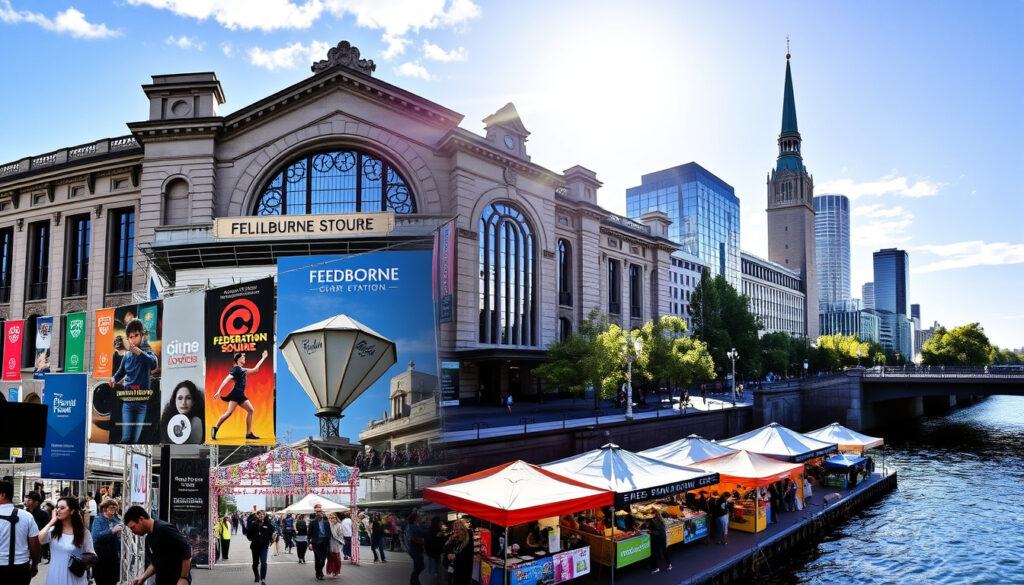
What’s On in Melbourne: Events, Festivals & Things to Do
You’ve landed on this page because somewhere in the back of your mind, you remember Melbourne as that city that always seems to have something happening. Good instinct — the city’s official events calendar lists over 400 festivals and events across arts, comedy, design, food, music, and sport, making it one of Australia’s most event-packed destinations all year round.
Major annual events in Melbourne: 200+ · Rainiest month: October (avg 67mm) · Recommended trip duration: 5 days · Best month to visit for mild weather: March
Quick snapshot
- Rainiest month is October (Bureau of Meteorology – Melbourne climate averages)
- Australian Open is held annually in January (City of Melbourne – Official events calendar)
- City of Melbourne website is the official events source (What’s On Melbourne – City of Melbourne)
- Exact schedule of events for January 2026 is not yet published — will update as dates are confirmed
- The “biggest festival” may vary by attendance metric: comedy festival vs racing vs sports
- January – Australian Open tennis
- March – Melbourne International Comedy Festival begins; Moomba Festival
- October – Melbourne Cup (horse racing)
- November-December – Christmas markets and carols
- Check What’s On Melbourne for daily updates
- Free outdoor events and family activities often appear on short notice (What’s On Melbourne)
- Book popular events like the Comedy Festival early (What’s On Melbourne)
Four data points, one pattern: Melbourne runs on a year-round festival economy rather than a single peak season. The next table gives the essential reference numbers for planning.
| Attribute | Value | Source |
|---|---|---|
| Capital city of Victoria | Melbourne | What’s On Melbourne – City of Melbourne |
| Population (metro) | 5 million | Tourism Australia – National events calendar |
| Number of major festivals per year | 50+ | City of Melbourne – Festivals page |
| Official event calendar | whatson.melbourne.vic.gov.au | What’s On Melbourne – City of Melbourne |
What are the major events and festivals in Melbourne?
Melbourne’s event calendar is dense. The City of Melbourne (official events calendar) groups festivals across arts, comedy, design, food, music, and sport, indicating year-round event density rather than a single peak season. The Australia-wide calendar from Tourism Australia (national tourism authority) helps visitors plan around major sporting and cultural events.
What is the biggest festival in Melbourne?
By attendance, the Melbourne International Comedy Festival is among the largest. According to the City of Melbourne (official festival listings), it runs from March through April across more than 100 venues city-wide. The Moomba Festival in March and the Melbourne Cup in November also draw enormous crowds. A 2026 guide from Bayside House (Melbourne accommodation publisher) lists Moomba from 5–9 March and the Grand Prix from 5–8 March as major draws.
What’s the biggest concert venue in Melbourne?
Rod Laver Arena, seating around 15,000, is the city’s largest indoor concert venue. The same Bayside House guide notes that major international acts such as Linkin Park and Mumford & Sons are booked there for 2026 tours.
Melbourne’s biggest festivals and concerts cluster in summer and autumn. If you want to catch a headliner or a major cultural event, aim for March–April, when the Comedy Festival, Moomba, and the Grand Prix overlap.
What is the best time to visit Melbourne?
Deciding when to visit depends on what you want. March stands out as the sweet spot: mild weather, fewer crowds, and a packed festival calendar.
What is the rainiest month in Melbourne?
- October is the rainiest month, with an average of 67 mm of rainfall (Bureau of Meteorology – Melbourne climate averages).
- Spring (September–November) and autumn (March–May) are shoulder seasons with good weather and events.
- Summer (December–February) can be hot but offers the Australian Open and Midsumma Festival.
The pattern: autumn gives you the best balance of dry days and festival access. If you’re chasing the Melbourne Cup, book October–November knowing rain is more likely.
How many days in Melbourne is enough and what not to miss?
Five days is the recommended itinerary for first-time visitors, according to guide conventions. This allows time for the city’s core attractions plus one day trip.
What not to miss in Melbourne?
- Federation Square – the cultural heart, hosting events and galleries
- Queen Victoria Market – historic market for food and crafts
- Royal Botanic Gardens – 38 hectares of green space
- Melbourne Zoo – one of Australia’s oldest zoos
- Great Ocean Road day trip – the iconic coastal drive with the Twelve Apostles (Tourism Australia – major attractions)
- Laneways and street art – Hosier Lane, AC/DC Lane
What this means: you can pack a lot into five days, but don’t try to do everything. Prioritise the market, gardens, and one day trip to leave room for wandering the laneways and catching evening events.
What’s on in Melbourne right now?
For the most current listing, the City of Melbourne’s What’s On Melbourne (official events calendar) is the definitive source. It lists daily events including free outdoor screenings, markets, and festivals.
What’s on in Melbourne tonight?
Free events are common. The City of Melbourne (festivals page) often highlights evening activities such as live music at Federation Square, pop-up bars, and late-night market openings.
What’s on in Melbourne this weekend for families?
Family-friendly options include the Moomba Festival (March), Melbourne Zoo, museums like the Melbourne Museum, and the Tourism Australia (family event calendar) lists many outdoor events. The St Kilda Festival in February is also great for families.
What’s on in Melbourne in January 2026?
Exact schedules for January 2026 are not yet published, but annual fixtures include the Australian Open (tennis) and Midsumma Festival (18 Jan–8 Feb). A 2026 guide from Bayside House (Melbourne events preview) confirms these dates. Australia Day events on 26 January are also expected.
What’s on in Melbourne Theatre?
Major theatre venues include the Princess Theatre, Her Majesty’s Theatre, and the Arts Centre Melbourne. The What’s On Melbourne (theatre listings) provides up-to-date shows.
Melbourne’s cultural scene runs year-round, but the winter months (June–August) see fewer outdoor festivals. If you’re a theatre lover, winter is actually a great time to catch indoor performances without competing with the big festivals.
How do you say “hi” in Australian?
A common Australian greeting is “G’day”, short for “good day”. You might also hear “How ya goin’?” or simply “Oi”. In Melbourne, locals use standard English greetings too. Understanding a bit of local slang can make your trip feel more welcoming.
Melbourne events timeline
| Month | Event |
|---|---|
| January | Australian Open tennis, Midsumma Festival, Australia Day |
| February | Sustainable Living Festival, St Kilda Festival |
| March | Moomba Festival (5–9 Mar), Formula 1 Grand Prix (5–8 Mar), Comedy Festival begins (25 Mar) |
| April | Melbourne International Comedy Festival continues |
| October | Melbourne Cup |
| November–December | Christmas markets, carols, Now or Never festival |
Sources: Bayside House – 2026 events guide · City of Melbourne – festivals page
What we know and what remains uncertain
Confirmed facts
- Rainiest month is October (Bureau of Meteorology climate data)
- Australian Open is held annually in January (City of Melbourne official calendar)
- City of Melbourne website is the official events source (What’s On Melbourne)
What’s unclear
- Exact schedule of events for January 2026 not yet published
- The ‘biggest festival’ metric varies by attendance measurement
What local sources say
Find out what’s on in Melbourne with all the latest events, restaurants, bars, shopping destinations and things to do.
— City of Melbourne (official tourism website)
Melbourne’s events calendar is packed: music, film and design festivals, major exhibitions, sports events, theatre, and food and wine celebrations.
— Tourism Australia (national tourism authority)
Melbourne rewards the planner more than the spontaneous traveller. For anyone visiting during the festival-heavy summer and autumn months, the choice is clear: book accommodation early, check the City of Melbourne calendar daily, and be prepared for rain in October. The traveller who skips planning risks missing the very events that make this city different from any other in Australia.
Frequently asked questions
Are there free events in Melbourne?
Yes, many festivals and markets offer free entry. The City of Melbourne’s whatson page includes free outdoor screenings, pop-up performances, and community events.
What is the dress code for the Melbourne Cup?
The Melbourne Cup has a strong tradition of formal fashion. For the main race day, men usually wear suits, and women wear elegant dresses and hats. Some areas have specific dress requirements.
Can I visit Melbourne in winter?
Yes, winter (June–August) is a great time for indoor attractions like museums, galleries, and theatre. The city’s winter festival at Docklands runs for three nights and includes light installations and food.
How do I get tickets for major events?
Tickets for festivals like the Comedy Festival, Australian Open, and Melbourne Cup are sold through official ticket agencies (Ticketek, Ticketmaster). Book early as events often sell out.
Is Melbourne good for family holidays?
Absolutely. Attractions like Melbourne Zoo, Scienceworks, the Melbourne Museum, and the Moomba Festival are family-friendly. The city also has excellent parks and playgrounds. For more on Melbourne attractions, see our Victoria Hotel Melbourne guide.
What is the nightlife like in Melbourne?
Melbourne has a vibrant nightlife scene with rooftop bars, live music venues, late-night restaurants, and clubs concentrated in the CBD, Fitzroy, and St Kilda.
More related posts
 Will Cyclone Alfred Hit Brisbane? Impact, History & Flood Risk
 Human Resources: Key Roles, Skills & Careers in Ireland
 Split Fiction PS5 – Release Date, Gameplay Guide
 Paul Reubens Dies at 70: Cause of Death, Legacy
 Apple Watch Series 11: Price, Features, and Health Benefits
 Annie Leibovitz: Famous Photos, Life, and Controversies
 Mila Kunis: Age, Net Worth, Eye Condition, and Children
 CHF to AUD: Exchange Rate, Forecast & Swiss Franc vs AUD