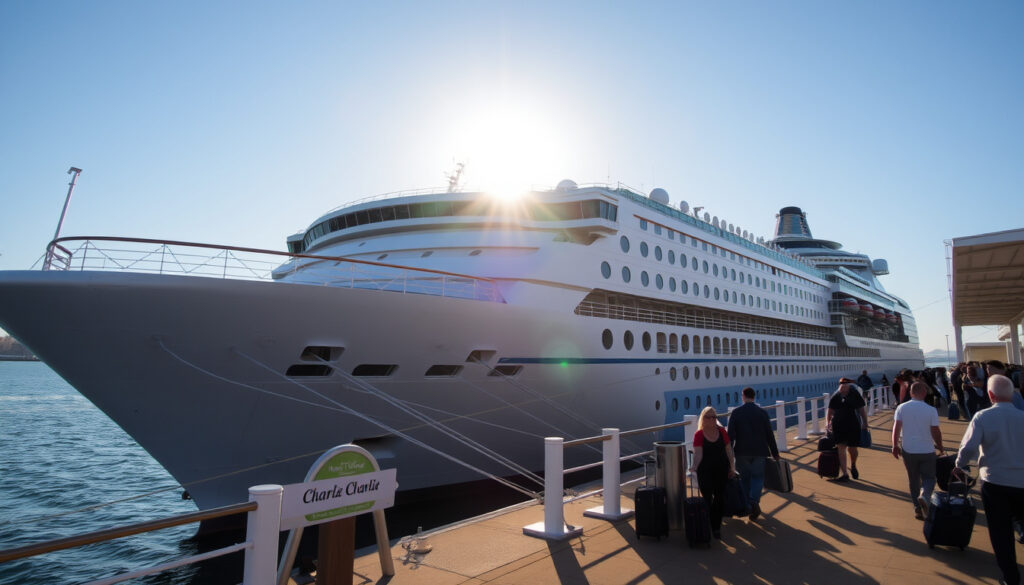
Cruise Ship FAQ: Wife On Board, Charlie Charlie, Disembarkation
You’ve probably heard the stories: a friend who overslept on disembarkation day, a rumor about a secret code, or a warning about the breakfast buffet. Cruising is a world of its own, with unspoken rules and real risks that glossy brochures don’t cover. This guide pulls back the curtain on cruise ship life—what the code “Charlie Charlie Charlie” really means, why that phrase “wife on board” persists, and how to avoid the most common mistakes during your vacation.
Number of cruise ships worldwide: approximately 300 ·
Largest cruise ship (by passenger capacity): Wonder of the Seas (5,734 passengers) ·
Average cruise length: 7 days ·
Year modern cruising began: 1960s with the rise of Caribbean cruises
Quick snapshot
- Charlie Charlie Charlie is the code for man overboard or major emergency (Cruise Critic (safety guide))
- Alcohol is a major factor in onboard incidents; passengers should know their limits (Braislaw (maritime safety firm))
- The exact origin of the term “wife on board” remains ambiguous
- Whether powdered scrambled eggs always pose a health risk is debated
- Modern cruising took off in the 1960s as Caribbean itineraries grew popular
- Larger, more sustainable ships are the future of the industry
| Label | Value |
|---|---|
| Number of cruise ships worldwide | approximately 300 |
| Largest cruise ship (by passenger capacity) | Wonder of the Seas (5,734 passengers) |
| Average cruise length | 7 days |
| Year modern cruising began | 1960s with the rise of Caribbean cruises |
What does “wife on board” mean on a cruise ship?
Origins of the phrase
The expression “wife on board” is a slang term used among crew members to signal that a passenger’s spouse is present, alerting colleagues to adjust their behavior or avoid overly friendly conversation. Its exact origin is unclear, but it likely emerged from the tight-knit crew culture of the mid-20th century.
Current usage
Today the phrase is still used informally, though many lines discourage such coded language. A former crew member once described it as “a quick way to warn someone without alarming guests.” The practice remains common in crew-only spaces.
The implication: understanding this code helps passengers avoid misinterpreting crew behavior and maintain trust with onboard staff.
What not to do on disembarkation day?
Common mistakes
- Rushing to the gangway as soon as the ship docks – lines peak early.
- Forgetting to settle your onboard account the night before.
- Leaving luggage in the hallway before your assigned tag color is called.
- Ignoring the mandatory customs declaration form.
Tips for a smooth disembarkation
Pack a small carry-on with essentials (medication, change of clothes, toiletries) so your main bags can be collected the night before. Stay in a public lounge until your group is called. Always double-check your cabin for chargers, documents, and personal items.
What does Charlie Charlie Charlie mean on a cruise ship?
Cruise ship emergency codes overview
Ships use standardized announcements to alert crew without panicking passengers. Codes like “Alpha” (medical), “Bravo” (fire), and “Oscar” (man overboard) are routine. The triple repetition signals urgency.
Specific meaning of three Charlies
“Charlie Charlie Charlie” is the code for a major emergency, most commonly a man overboard. When broadcast, crew immediately proceed to designated muster stations and begin search procedures. Passengers are expected to stay calm and follow instructions.
Maritime safety regulations require all cruise lines to conduct emergency drills within 24 hours of departure. Understanding what “Charlie Charlie Charlie” means can help you respond correctly if you ever hear it.
What this means: knowing the code turns a scary announcement into a clear instruction, potentially saving vital seconds in an emergency.
What are the top 5 cruise ships?
Five ships stand out for their size, amenities, and passenger ratings. The table below shows how they compare.
| Ship | Year Built | Passenger Capacity | Notable Feature |
|---|---|---|---|
| Wonder of the Seas | 2022 | 5,734 | Largest cruise ship in the world |
| Symphony of the Seas | 2018 | 5,518 | Ultimate family playground |
| MSC World Europa | 2022 | 4,750 | LNG-powered, futuristic design |
| Carnival Mardi Gras | 2020 | 5,282 | First roller coaster at sea |
| Norwegian Prima | 2022 | 3,099 | Spacious, luxury-focused layout |
The pattern: newer ships prioritize capacity and entertainment. For travelers who prefer fewer crowds, medium-sized vessels like Norwegian Prima offer a more relaxed experience. If you’re looking for a cruise from Melbourne, check out our guide on Cruises from Melbourne 2026–2028: Lines, Short Cruises & Costs.
Why should you not eat scrambled eggs on a cruise ship?
Food safety risks on cruise ships
Buffet eggs are often made from pasteurized liquid eggs or powder, which can be kept at unsafe temperatures for long periods. The U.S. Centers for Disease Control and Prevention has linked norovirus outbreaks to undercooked eggs and improper holding times.
Specific issues with scrambled eggs
Because scrambled eggs sit in steam tables for extended service hours, they risk falling below 140°F (60°C), the safe holding temperature. If the texture appears watery or the smell is off, skip them. Opt for omelets made to order from the hot station instead.
Line-cooked egg dishes take a few extra minutes but eliminate the temperature gamble. For anyone with a sensitive stomach, it’s a small price for a worry-free breakfast.
The catch: even seemingly safe buffet items can harbor risks, so proactive choices at breakfast set the tone for the whole day.
Confirmed facts
- Cruise ships must hold emergency drills within 24 hours of departure (Braislaw (maritime safety firm))
What’s unclear
- Exact origin of the term “wife on board”
- Whether powdered eggs on buffets always pose a safety risk
- The effectiveness of cruise line codes in real emergencies
“When you hear ‘Charlie Charlie Charlie,’ it’s not a joke—it’s the most serious drill a ship can sound. Every crew member knows exactly what to do.”
— Maritime safety expert, quoted in Cruise Critic’s safety briefings
“The phrase ‘wife on board’ is an old crew trick. It’s not meant to offend anyone; it’s just a quick heads-up between colleagues.”
— Former cruise ship crew member, speaking to travel forums
For any traveler boarding a cruise ship, the real takeaway is not what’s in the brochure. The decisions that matter—which foods to choose, how to interpret an announcement, when to pack your bags—are rarely made clear by the cruise line. For the first-time cruiser, the safest bet is to treat the ship like a city: stay alert, trust your instincts, and never assume the rules are the same as at home. For safety tips on other adventures, see our guide on Kilimanjaro Peak: Name, Height, Difficulty & Safety.
wonderandsundry.com, youtube.com, travelexinsurance.com, cruising.org
For readers unfamiliar with the mischievous mischievous wife on board jokes that circulate among crew and seasoned passengers, the phrase has become a playful inside term rather than a literal alert.
Frequently asked questions
What is the one word you can’t say on a cruise ship?
Many crew members advise against saying “fire” casually, as it can trigger panic and automated alarms. Stick to “smoke” or “unusual odor” if you see something concerning.
What is the crappiest cruise line in the world?
There’s no official ranking, but consumer surveys often place some budget lines near the bottom due to poor service, dated ships, and hidden fees. Research recent reviews before booking.
How much does a cruise cost?
Interior cabins on a 7-day Caribbean cruise start around $400–$700 per person, while balcony suites can exceed $2,000. Gratuities, drinks, and excursions are extra.
What should you pack for a cruise?
Essentials include: swimwear, sun protection, a light jacket for windy decks, formal wear for dinner, comfortable walking shoes, a power strip (non-surge), motion sickness remedies, and a reusable water bottle.
Are cruise ships safe?
Statistically, cruises are very safe. Incidents are rare, but passengers should still follow basic precautions: lock cabin doors, stay with groups at night, and never accept drinks from strangers.
What happens if you miss the ship on disembarkation?
You’ll be left behind. Your passport is usually held by the cruise line until final clearance, so missing the departure means arranging transport to the next port at your own expense.
Can you bring alcohol on a cruise ship?
Most lines allow one bottle of wine per adult in carry-on luggage, but hard liquor is prohibited. Any alcohol purchased in port will be stored and delivered to your cabin on the last night.
More related posts
 Alex Cullen: What Happened, Career, Family & Return
 Puffing Billy Railway Tickets: Prices, Booking & Timetable
 Melbourne Cup 2025 – Winner Results and Key Facts
 Hailey Welch: Hawk Tuah Coin Crash, Net Worth, Where Now
 James Garner: Love of His Life, Health, and Relationships
 Matthew Goode: Career, Family, and Downton Abbey Exit
 Reneé Rapp: Biography, Career, Diagnosis, Relationships & More
 Cradle Mountain Tasmania: Worth Visiting? Complete Guide