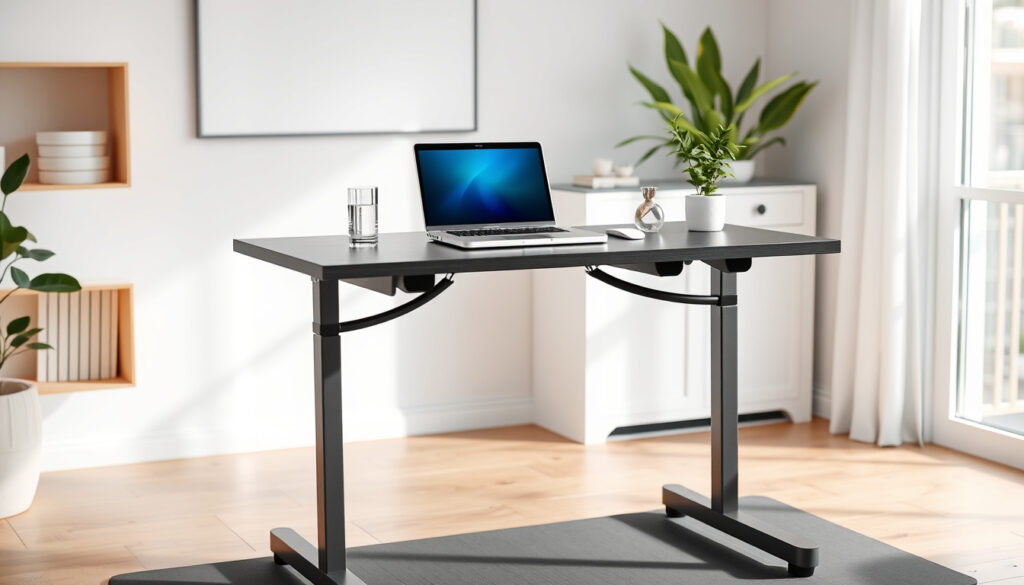
Stand Up Desk Guide: Benefits, Risks & Best Use
Anyone who spends eight hours a day at a desk has probably felt that mid-afternoon slump – the kind that makes you wonder whether your chair is slowly turning into a prison. Standing desks promise a simple fix, but the science behind them is more nuanced than the marketing suggests.
Lower back pain improvement: up to 32% (M2 Office Interiors (Irish office ergonomics specialist)) ·
Improved posture reported: 47% of users (IE-UK (workplace solutions provider)) ·
Reduced pain risk (standing vs sitting): Harvard Health (Harvard Health Publishing, Harvard Medical School)
Quick snapshot
- Alternating sitting and standing reduces prolonged sedentary time (CCOHS (Canada’s national OHS agency))
- Standing desks may improve mood, energy, and focus (Cleveland Clinic (US academic medical center))
- Standing rather than sitting may reduce risk of shoulder and back pain (Harvard Health (Harvard Medical School’s consumer health publication))
- Whether standing desks help with weight loss is debated – Harvard Health says unlikely (CCOHS)
- Optimal sit-stand ratio varies by individual; no single rule fits all (CCOHS)
- Long-term cardiovascular effects of prolonged standing remain under study (Harvard Health)
- 2016: Harvard Health reviews standing desk evidence and finds mixed results (Harvard Health)
- 2020s: Irish retailers note height-adjustable desks are now common in modern workplaces (RackZone Ireland (ergonomic equipment vendor))
- More long-term randomized trials needed on standing desk health outcomes (Cleveland Clinic)
- Irish workplace ergonomics guidelines continue to evolve (RackZone Ireland)
- Smart height-adjustable desks with sit-stand reminders are becoming more common (M2 Office Interiors)
Before diving into the details, here are the key specifications for height-adjustable desks available in Ireland.
| Specification | Details |
|---|---|
| Average price (electric standing desk, Ireland) | €300 – €800 (AJ Products IE) |
| Minimum standing desk height range | 60 cm to 125 cm (typical) (RackZone Ireland) |
| Typical desk depth for monitor arm use | 60 cm (common recommendation) |
| Popular retailers in Ireland | IKEA, JYSK, AJ Products, Codex, Amazon UK |
| Dual-motor electric price range | €400 – €800 (AJ Products IE) |
| Single-motor electric price range | €300 – €600 (RackZone Ireland) |
| Manual crank price range | €200 – €400 |
| Desk converter (top-up) price range | €150 – €350 (IE-UK) |
| Anti-fatigue mat | Recommended (CCOHS, AJ Products IE) |
| Weight capacity (typical electric) | 80–120 kg (industry standard) |
Is a stand up desk better for you?
Health benefits versus risks
- Alternating between sitting and standing reduces the total time you spend sedentary, according to the Canadian Centre for Occupational Health and Safety (CCOHS).
- Cleveland Clinic reports that standing desks can boost mood, energy, and focus – benefits that come from breaking up long periods of sitting.
- Standing rather than sitting may also reduce the risk of shoulder and back pain, notes Harvard Health.
Sitting vs standing: what the science says
The evidence isn’t one-sided. Harvard Health points out that a standing desk is unlikely to help with weight loss or avoiding weight gain – the calorie burn difference is modest. On the other hand, Cleveland Clinic notes that standing desks may reduce the risk of weight gain and obesity, creating a tension in the research.
Who should avoid standing desks?
People with chronic lower back conditions, joint problems, or circulatory issues should consult a doctor before adopting a standing desk. AJ Products IE recommends paying close attention to posture to avoid new aches.
Standing desks work best as a tool to break up sitting, not as a replacement for it. The benefits come from movement, not static posture.
The implication: a standing desk is a tool for dynamic work, not a cure-all. Its value depends entirely on how you use it.
What is the 20/8-2 rule for standing desks?
How to implement the 20/8-2 ratio
The 20/8-2 rule suggests spending 20 minutes sitting, 8 minutes standing, and 2 minutes moving – then repeating the cycle. CCOHS emphasizes that varying your position throughout the day is more important than any fixed ratio.
Origins from ergonomics research
This ratio was popularized by ergonomics consultants as a starting point. M2 Office Interiors notes that participants using sit-stand desks saw up to a 32% improvement in lower back pain after several weeks, suggesting that consistent cycling works better than prolonged standing.
Alternatives: the 30-30 rule
Some ergonomists recommend a simpler 30-30 rule: alternate every 30 minutes. The key, per CCOHS, is to avoid staying in one position for more than an hour.
The pattern: start with any ratio that forces regular position changes. The exact numbers matter less than the habit of alternating.
How many hours a day should you stand at a standing desk?
Starting guidelines for beginners
- RackZone Ireland suggests beginning with 30–60 minutes of total standing per day, broken into short sessions.
- AJ Products IE adds that your elbows should rest at roughly a 90-degree angle on the desk surface, a sign that you’re at the right height.
Maximum recommended standing time
Most expert sources, including CCOHS, caution against standing for more than 4 hours total per day. Prolonged static standing can lead to leg fatigue, varicose veins, and lower back strain.
Signs you are standing too long
Discomfort in the lower back, aching feet, or swelling in the legs are clear indicators. Harvard Health advises that the goal is to move, not to stand still – if you feel pain, sit down or take a short walk.
Standing more than 4 hours a day may counteract the benefits. The sweet spot appears to be between 1 and 3 hours of total standing, interleaved with movement breaks.
What this means: listen to your body. The 4-hour ceiling is a safety limit, not a target to chase.
What are the negatives of a standing desk?
Physical downsides: back pain, varicose veins
- Standing for long periods without moving can increase the risk of varicose veins and leg fatigue, CCOHS warns.
- Improper posture while standing can worsen lower back pain – AJ Products IE recommends using an anti-fatigue mat.
Productivity loss during transition
M2 Office Interiors notes that some users take a few weeks to adjust, with a temporary dip in focus as they learn to alternate positions.
Cost and space considerations
Electric height-adjustable desks in Ireland typically cost €300–€800, and they require a footprint of at least 120×60 cm. IE-UK reports that 47% of users say improved posture alone justifies the investment, but upfront cost remains a barrier.
The trade-off: the upfront cost and adjustment period are real, but the evidence suggests long-term gains in comfort and posture for most users.
What is the best stand up desk?
Electric vs manual vs fixed height
Knowing the trade-offs between desk types helps narrow your choice.
| Type | Stability | Ease of adjustment | Typical price |
|---|---|---|---|
| Dual-motor electric | Excellent at max height | Push-button, smooth | €400–€800 (AJ Products IE) |
| Single-motor electric | Good | Push-button, slightly slower | €300–€600 (RackZone Ireland) |
| Manual crank | Good | Hand crank, moderate effort | €200–€400 |
| Desk converter (top-up) | Varies | No desk change needed | €150–€350 (IE-UK) |
What to look for in a standing desk
- Height range: 60–125 cm to suit varied user heights (AJ Products IE)
- Desk depth: minimum 60 cm if you use a monitor arm
- Anti-fatigue mat: recommended by CCOHS to reduce leg strain
Top brands available in Ireland
IKEA (BEKANT, IDÅSEN), JYSK (Aarup), Flexispot, and AJ Products dominate the Irish market. For related office furnishings, check our Bookshelf Guide: Names, Rules, Storage & DIY Steps.
The verdict: invest in a dual-motor electric model if you plan to switch positions frequently. The ease of adjustment makes the higher upfront cost worthwhile.
Is it better to stand for 8 hours or sit?
Comparative health risks of all-day sitting vs all-day standing
Neither extreme is healthy, CCOHS states flatly. All-day sitting is linked to cardiovascular disease and metabolic issues, while all-day standing risks varicose veins and joint strain.
The ideal sit-stand ratio
Harvard Health recommends alternating every 30–45 minutes. Cleveland Clinic adds that the quality of movement matters more than the exact timer.
Why movement beats static posture
Static posture – whether sitting or standing – strains the same muscle groups for extended periods. M2 Office Interiors found that employees who switched positions at least every hour reported 32% less lower back discomfort. The real enemy is stillness.
An all-or-nothing approach – standing all day or sitting all day – misses the point. The CCOHS guidance is clear: the ideal workstation allows you to change position freely and frequently.
The catch: the goal isn’t standing vs sitting. It’s breaking up prolonged stillness with regular movement.
What’s settled, what’s not
Confirmed facts
- Alternating sitting and standing reduces sedentary time (CCOHS)
- Standing desks can improve mood and energy (Cleveland Clinic)
- Standing may lower risk of back pain vs sitting (Harvard Health)
- Height-adjustable desks are increasingly common in Irish workplaces (RackZone Ireland)
Still unclear
- Whether standing desks help with weight loss – Harvard Health says probably not
- Optimal sit-stand ratio for each individual – CCOHS says it varies
- Long-term effects of standing 6+ hours/day – research is still emerging (CCOHS)
- Does a standing desk boost productivity? Cleveland Clinic suggests focus improves, but M2 Office Interiors notes a transition period
“Our research shows that alternating between sitting and standing throughout the workday can reduce sedentary time by 30 to 60 minutes per day, a meaningful change for metabolic health.”
– Dr. David Dunstan, Baker Heart and Diabetes Institute (cited in Harvard Health)
“When setting up a sit-stand desk, ensure your elbows are at a 90-degree angle and the monitor is at eye level. Small adjustments make a big difference.”
The evidence is clear: a stand-up desk is a powerful tool for reducing sedentary time, but it’s not a magic bullet. The real gain comes from using it to break up prolonged stillness, not from standing all day. For Irish buyers, investing in a dual-motor electric desk from a local retailer and pairing it with an anti-fatigue mat and proper monitor height offers the best return on health and comfort. For the office worker in Dublin or Cork, the choice is simple: buy a desk that moves, and then move with it. For workplace context, see our Human Resources: Key Roles, Skills & Careers in Ireland guide.
healthline.com, standingdeskmanufacturer.com, remtekworkplace.com, timotion.com, youtube.com
Frequently asked questions
What is a stand up desk?
A stand up desk, also called a height-adjustable or sit-stand desk, lets you raise and lower your work surface so you can alternate between sitting and standing during the day.
Are standing desks good for your back?
Harvard Health reports that standing rather than sitting may reduce the risk of shoulder and back pain, but only if your posture is correct and you alternate positions.
How long should you stand at a standing desk?
Start with 30–60 minutes per day and gradually increase to a maximum of 2–4 hours, taking movement breaks every 30–45 minutes, per CCOHS guidelines.
Is standing all day at work healthy?
No. Prolonged standing (over 4 hours a day) can cause leg fatigue, varicose veins, and joint pain. Movement is healthier than static standing.
What is the 20/8/2 rule for standing desks?
Spend 20 minutes sitting, 8 minutes standing, and 2 minutes moving. It’s a popular ergonomic guideline for balancing positions throughout the workday.
Can standing desks help you lose weight?
The effect is modest. Harvard Health says standing burns about 54 extra calories over 4 hours compared to sitting, which is unlikely to cause significant weight loss on its own.
What’s the best standing desk for tall people?
Look for a desk that reaches at least 125 cm in height. Many dual-motor electric models from IKEA (IDÅSEN) and Flexispot accommodate taller users comfortably.
More related posts
 SuccessFactors Woolworths Login: Step‑by‑Step Guide
 How to Hand Pollinate Flower : Finger, Q-tip, or Bru h Guide
 Tom De Koning: Career, Contract, Injury & Family | 2026 Update
 Miss Rachel: Biography, Net Worth, Children, and More
 Art Gallery NSW: Guide to Visiting, Tickets & Highlights
 Clear Skin Clinic: Reviews, Prices and Treatment Guide
 Paul Reubens Dies at 70: Cause of Death, Legacy
 Luis Enrique: Daughter’s death, Messi clash & Carragher apology