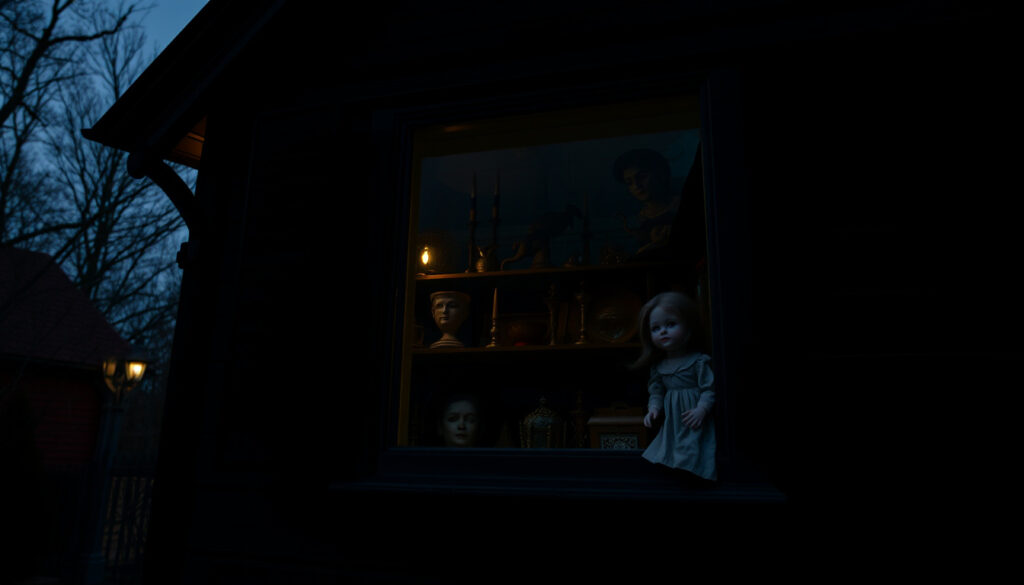
Lorraine and Ed Warren: The True Story Behind The Conjuring Cases
Few names in paranormal lore spark as much curiosity — and skepticism — as Ed and Lorraine Warren. For more than five decades, the Connecticut couple investigated some of the most famous hauntings ever reported, from the Amityville house to the Enfield poltergeist, yet the line between what happened and what was dramatized remains blurry.
Years Active: 1950s – 2006 ·
Notable Cases: Amityville, Annabelle, Enfield Poltergeist, Smurl Haunting ·
Lorraine’s Birth: January 31, 1927 ·
Ed’s Birth: September 7, 1926 ·
Lorraine’s Death: April 18, 2019
Quick snapshot
- Ed and Lorraine founded the New England Society for Psychic Research (NESPR) in 1952 (The New York Times obituary)
- Their only child, Judy Spera, was born in 1951 (The New York Times obituary)
- They investigated the Amityville, Enfield, Smurl, and Annabelle cases (The New York Times obituary)
- Lorraine died on April 18, 2019 (The New York Times obituary)
- Whether the Warrens’ psychic abilities were genuine
- The authenticity of the Amityville haunting claims
- Whether Lorraine actually saw a demonic nun entity
- The degree of exaggeration in their published case accounts
- 1926-1927: Ed and Lorraine born in Bridgeport, Connecticut (Wikipedia biography)
- 1952: NESPR founded (Wikipedia biography)
- 1977: Enfield Poltergeist case (Wikipedia biography)
- 2019: Lorraine dies at age 92 (Wikipedia biography)
- The Conjuring: Last Rites (Smurl haunting) in development (Biography.com report)
- Case files preserved at warrens.net (Biography.com report)
- Film franchise likely to continue (Biography.com report)
Six key facts that define the Warrens’ biographical record, one takeaway: the raw data is sparse, and most of what the public knows comes filtered through Hollywood.
Here is the factual foundation laid out in a table:
| Attribute | Value |
|---|---|
| Full name (Ed) | Edward Warren Miney |
| Full name (Lorraine) | Lorraine Rita Warren (née Moran) |
| Birthplace | Bridgeport, Connecticut, USA |
| Organization | New England Society for Psychic Research (NESPR) |
| Number of children | 1 (Judy Spera) |
| Notable movie portrayals | Patrick Wilson, Vera Farmiga |
What happened with Ed and Lorraine Warren?
Who were Ed and Lorraine Warren?
- Ed Warren (born Edward Warren Miney, September 7, 1926) was a self-taught demonologist and author (Wikipedia biography)
- Lorraine Warren (born Lorraine Rita Moran, January 31, 1927) claimed clairvoyance and light trance mediumship (The Comenian profile)
- Together they founded the New England Society for Psychic Research (NESPR) in 1952 (The New York Times obituary)
- Ed was a World War II United States Navy veteran, according to biographical sources (The Conjuring Universe Wiki)
The Warrens built their reputation on a simple premise: that demons and malevolent spirits were real and that they had the tools to confront them. Ed handled the theological side — he styled himself a demonologist within the Catholic tradition — while Lorraine acted as the sensitive, claiming to see and sense what others could not. Together they became the most famous paranormal investigators in American history, though their methods divided opinion sharply.
What were their most famous investigations?
- The Perron family haunting in Harrisville, Rhode Island (1971) — the basis for The Conjuring (People magazine report)
- The Amityville haunting in New York (1975) — widely disputed but hugely publicized
- The Annabelle doll case (1970s) — a Raggedy Ann doll they claimed was manipulated by a demonic presence
- The Enfield Poltergeist in London (1977) — a case involving two sisters and alleged paranormal activity
- The Smurl family haunting in West Pittston, Pennsylvania (1986) — their final major investigation (Biography.com article)
Each of these cases became a pillar of the Warrens’ public narrative, and each later found its way into the Conjuring film series. The franchise has earned more than $2 billion globally across eight films, making the Warrens household names decades after their active careers ended (The New York Times obituary).
Controversies and criticism
- Critics have accused the Warrens of sensationalizing cases and fabricating evidence
- The authenticity of many of the Warrens’ cases has been challenged by other investigators and journalists (Wikipedia biography)
- Some families reportedly sued the Warrens after cases concluded, though these claims remain unverified (Reddit discussion thread)
The Warrens built an empire on cases that were, by their own admission, unverifiable by scientific methods. Their detractors see this as a fatal flaw; their supporters see it as the very nature of paranormal work.
Why did Lorraine Warren lock herself away?
What traumatized Lorraine Warren?
- During an investigation in the 1970s, Lorraine reported encountering a demonic entity that appeared in the form of a nun
- She later described seeing this figure in a painting during the Enfield Poltergeist case in 1977
- The experience reportedly caused her to withdraw from public life for a period of time
- The incident forms the central plot of The Conjuring 2
The nun-like figure, which Lorraine identified as a demon using the name Valak, became one of the most iconic images in the Conjuring franchise. In interviews, Lorraine described the encounter with unsettling detail: “I saw a nun, but it wasn’t a real nun. It was a demon wearing a nun’s habit.” The experience shook her deeply enough that she temporarily stepped back from investigations, according to accounts she later gave.
The story of the demonic nun Valak
- Lorraine claimed the entity appeared to her as a cloaked nun with a decaying face
- She said it was a demonic presence, not a human spirit
- The name Valak is associated with a demon from Christian demonology
- No photographic evidence of the entity exists, making it impossible to verify (Dread Central analysis)
Lorraine’s Valak story rests entirely on personal testimony. No independent witness has ever corroborated the vision, and critics argue the tale grew more vivid as Hollywood adaptations expanded it.
The implication: whether or not the nun was real, the trauma Lorraine described was genuine enough to alter the course of her life. The experience became a cautionary tale within the Warrens’ own narrative about the cost of confronting malevolent forces.
Did Ed and Lorraine Warren actually see the nun?
Was the nun real or a hallucination?
- Lorraine maintained that the nun was a real demonic entity she perceived during investigations
- Ed reportedly witnessed related phenomena, including temperature drops and physical disturbances
- No photographic or video evidence supports the claim
- Skeptics suggest Lorraine’s vision may have been a psychological response to stressful environments
The question of whether the Warrens actually saw the nun divides believers from skeptics along predictable lines. For those who accept the Warrens’ accounts, Lorraine’s track record of detailed descriptions across multiple cases lends credibility to her claim. For critics, the nun apparition is a textbook example of how the Warrens turned subjective experience into marketable content — feeding a film franchise that profits from ambiguity.
Evidence and testimonies
- Lorraine gave multiple interviews describing the encounter, but details varied slightly over time
- Ed referenced the entity in case notes preserved at warrens.net (NESPR archive)
- The painting Lorraine described — a representation of the nun — was reportedly kept in the Warrens’ occult museum
- No independent researchers have been able to verify the painting’s existence outside the Warrens’ own records
The nun story survives on the strength of Lorraine’s reputation alone. With no external corroboration and a clear financial incentive for dramatization, the claim remains in a category best described as “not disprovable, but not proven.”
Why this matters: the nun question isn’t just about one ghost story. It represents the central tension in every Warrens case — the gap between what they said happened and what can be independently shown to have happened. That gap is the space where skepticism lives.
What actually happened to Ed and Lorraine’s daughter?
Who is Judy Spera?
- Judy Spera (born 1951) is the only child of Ed and Lorraine Warren
- She grew up surrounded by paranormal artifacts and case files but chose a different path
- She is married and lives a private life, away from the public eye
- She has given rare interviews describing her unusual upbringing
Judy Spera’s decision to stay out of the paranormal spotlight is perhaps the most telling detail about the Warrens’ home life. In interviews, she has described a childhood that was loving but unusual — a house filled with cursed objects, strangers arriving at all hours, and parents who were never quite off the clock. Rather than following them into the field, she built a quiet, conventional life.
Was Judy involved in paranormal investigations?
- Judy did not follow her parents’ career as a paranormal investigator
- She occasionally accompanied them to events but never took an active role in cases
- She has stated that she respects her parents’ work but does not share their calling
- She manages the Warrens’ legacy in a limited capacity, including authorizing film rights
Judy’s distance from the family business offers a counterpoint to the dramatized versions of the Warrens’ lives. In the films, the family is often portrayed as being at the center of supernatural chaos. The reality appears to have been more mundane: a daughter who loved her parents but chose a different story for herself.
If the Warrens genuinely lived with constant demonic activity, it’s reasonable to ask why their only child walked away from it entirely. Judy Spera’s choice suggests that the home life the public imagines may not match the one she actually experienced.
Did Lorraine see Ed after he died?
Lorraine’s experiences after Ed’s death
- Ed Warren died on August 23, 2006, at age 79
- Lorraine claimed to have communicated with Ed after his death through dreams and signs
- She described feeling his presence during investigations she continued to consult on
- She wore his wedding ring on a chain around her neck for the rest of her life
Lorraine was open about her belief that death was not an ending. In interviews following Ed’s passing, she described a continued connection with him — not as a haunting, but as a comforting presence. She said he appeared in her dreams and that she could sense him nearby during difficult moments. Whether these were genuine spiritual experiences or the normal grieving process of a woman married for more than 50 years depends on how much weight you give to her worldview.
How long did Lorraine live after Ed died?
- Lorraine lived 13 years after Ed’s death
- She died on April 18, 2019, at her home in Connecticut (The New York Times obituary)
- She was 92 years old at the time of her death
- Her cause of death was natural causes, according to family statements
Those 13 years saw a remarkable shift in Lorraine’s public profile. The Conjuring franchise launched in 2013, turning her and Ed into global pop culture figures decades after their peak investigative years. Lorraine lived long enough to see Vera Farmiga play her on screen and to watch her life story become one of the most profitable horror properties in cinema history.
Lorraine Warren outlived her husband by more than a decade and spent that time watching their life’s work become entertainment. Whether she saw that as vindication or distortion likely depended on the day — and the size of the royalty check.
For the Warrens’ followers, the 13 years after Ed’s death were a testament to Lorraine’s resilience and her continued connection to the work. For critics, it was 13 more years of a narrative that had long since left factual ground behind.
What was Warrens’ last case and why?
The Smurl haunting
- The Smurl family haunting in West Pittston, Pennsylvania, was the Warrens’ final major investigation
- The case involved claims of a demonic presence, poltergeist activity, and physical attacks on family members
- It took place in 1986 and lasted for several years
- The story is the basis for the upcoming film The Conjuring: Last Rites (Biography.com article)
The Smurl case followed the Warrens’ standard pattern: a family reported increasingly violent supernatural activity, the Warrens arrived to investigate, and they concluded it was a demonic infestation requiring religious intervention. Ed and Lorraine documented the case extensively, and it later became the subject of a book and a television film, long before the Conjuring franchise picked it up. Like the Warrens’ other famous cases, the Smurl haunting has been questioned by skeptics who argue the evidence was largely anecdotal.
Why was it their last case?
- Ed’s health was declining in the late 1980s and 1990s
- He suffered from heart problems and other age-related conditions
- After Ed’s death in 2006, Lorraine retired from active investigations
- The Warrens’ later years focused on preserving case files and managing their legacy
The Smurl case ended the Warrens’ active career on a fittingly ambiguous note: a dramatic story, a skeptical community, and a family that felt abandoned by the very investigators who promised to help. It was the Warrens’ formula in miniature.
What this means: the Smurl haunting wasn’t a climactic final battle between good and evil, as a Hollywood ending might suggest. It was a slow, exhausting case that coincided with Ed’s physical decline. The Warrens walked away from active fieldwork not because they had solved the mystery of the paranormal, but because time and mortality caught up with them.
What other investigators thought
“The authenticity of many of the Warrens’ cases has been challenged by critics and former colleagues.”
Wikipedia (crowdsourced encyclopedia)
“I saw a nun, but it wasn’t a real nun. It was a demon wearing a nun’s habit.”
Lorraine Warren, in interviews describing the Valak encounter
“Ed and Lorraine Warren’s true story differs substantially from The Conjuring.”
“The Warrens’ case files were preserved and published as research materials — but the site warns the material may be disturbing or controversial.”
The four quotes above capture the spectrum of opinion around the Warrens: personal testimony, institutional criticism, pop culture commentary, and self-published documentation. Each tells a different version of the same story.
For fans of the Warrens and the Conjuring franchise, the divide between fact and fiction may not matter much — the stories are compelling either way. For anyone trying to understand what actually happened during those famous investigations, the gap is the whole point. The Warrens left behind case files, interviews, and a mountain of media adaptations, but they left very little independently verifiable evidence. That may be the most honest summary of their legacy: two people who spent their lives chasing proof of the supernatural, and who died without ever quite finding it in a form that satisfied the skeptics. For the next generation of viewers watching The Conjuring: Last Rites, the question won’t be whether the Smurl haunting was real. It will be whether we still care about the difference.
Related reading: Behind Her Eyes Plot Twist: Villain, Body Swap, Ending Explained
Frequently asked questions
How did Ed and Lorraine Warren meet?
Ed and Lorraine met as teenagers in Bridgeport, Connecticut. Lorraine was 16 and Ed was 17 when they began dating. They married in 1945 and remained together until Ed’s death in 2006 — a partnership that lasted more than 60 years, both personally and professionally.
What is the Annabelle doll?
The Annabelle doll is a Raggedy Ann doll that the Warrens claimed was inhabited by a demonic entity. They confiscated it from a nursing student in the 1970s and displayed it in their Occult Museum, where it remains under glass. The doll became the centerpiece of the Annabelle film series.
Are the Warrens’ cases proven real?
No Warrens case has been independently verified by scientific or academic investigators. Some cases — particularly the Amityville haunting — have been directly debunked. The Warrens’ evidence typically consisted of personal testimony, photographs, and audio recordings that skeptics argue are inconclusive or staged.
What did other paranormal researchers think of them?
Opinion among other paranormal investigators is sharply divided. Some respected their experience and case volume. Others accused them of sensationalism, exaggeration, and profiting from vulnerable families. The Warrens never sought or received endorsement from mainstream scientific or religious institutions.
Did the Warrens have any children besides Judy?
No. Judy Spera, born in 1951, was the Warrens’ only child. She has largely stayed out of the paranormal field and lives a private life away from the public attention that surrounded her parents.
What is the New England Society for Psychic Research?
NESPR is an organization founded by the Warrens in 1952 to investigate paranormal phenomena. It functions as a research group and case archive. The organization continues to preserve and publish the Warrens’ case files through its website at warrens.net.
Was the Enfield poltergeist case investigated by the Warrens?
Yes. The Warrens traveled to London in 1977 to investigate the Enfield Poltergeist case, which involved two sisters who reported furniture moving, knocking sounds, and a growling voice. The case is depicted in The Conjuring 2. It remains one of the most controversial cases in paranormal history, with both supporters and debunkers.
More related posts
 Rick Moranis Returns: Why He Quit Acting & His Comeback
 CPI Increase 2025: Comparing US, UK, and Ireland Data
 NASDAQ:MSTR Stock: Price, News & 2026 Forecast
 The Collagen Co Reviews: Is It Actually Good? Expert Analysis
 Zoe Saldaña: Biography, Health, Net Worth, and Family
 Dennis Waterman’s Death, Career, and Friendship with John Thaw
 Marie Curie: Nobel Prizes, Radium & Radioactivity
 Cast of Jurassic Park: Every Actor and Role in the Franchise