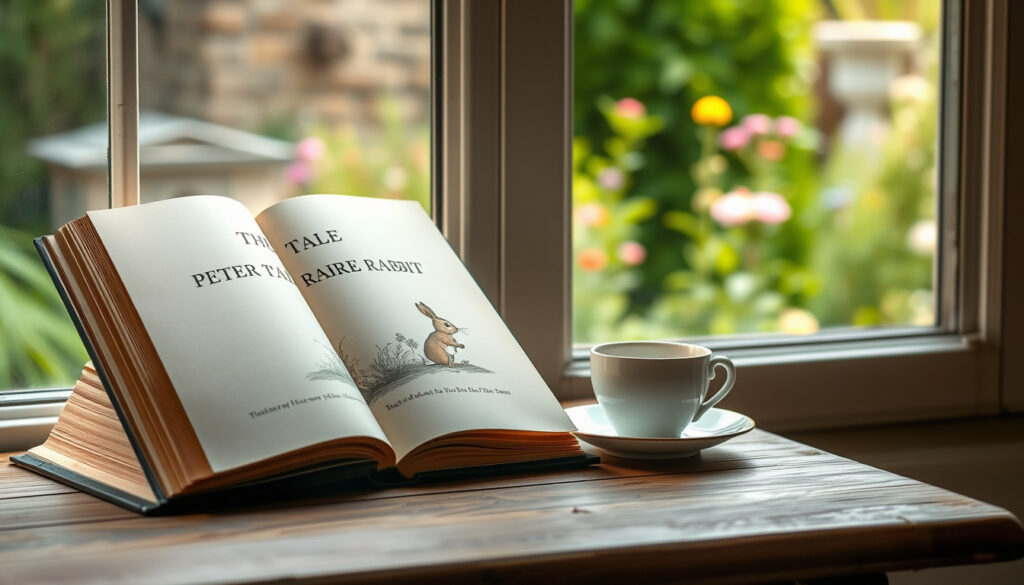
Beatrix Potter: Biography, Facts, and Kate Middleton Connection
Most people know Beatrix Potter as the woman who conjured up Peter Rabbit and his floppy-eared world. But behind the whimsy was a fiercely independent woman who defied Victorian expectations, became a pioneering conservationist, and quietly reshaped the English countryside.
Born: 28 July 1866, London, England · Died: 22 December 1943, Near Sawrey, England · Marriage: William Heelis (married 1913, age 47) · First Book: The Tale of Peter Rabbit (1902) · Children: None · Profession: Author, illustrator, natural scientist, conservationist
Quick snapshot
- Born Helen Beatrix Potter on 28 July 1866 in Kensington, London (V&A Museum)
- Bought Hill Top farm in the Lake District in 1905 (The Beatrix Potter Society)
- Bequeathed over 4,000 acres and fifteen farms to the National Trust (The Beatrix Potter Society)
- Created more than 20 children’s books as author and illustrator (National Trust)
- The exact nature of Potter’s recurring health problems – details of any specific illness remain undocumented in publicly available sources (The Telegraph)
- Whether she ever desired children – no personal letters or accounts have surfaced to confirm her feelings (The Telegraph)
- The full extent of the family link between Kate Middleton and Potter – reported but not verified through official genealogical records (The Telegraph)
- 1866: Born in London (V&A Museum)
- 1902: Published The Tale of Peter Rabbit (mentioned by National Trust)
- 1905: Bought Hill Top Farm in the Lake District (The Beatrix Potter Society)
- 1913: Married William Heelis (The Beatrix Potter Society)
- 1943: Died at Hill Top Farm (The Beatrix Potter Society)
- Potter’s books continue to sell millions worldwide, with new editions and adaptations in development (National Trust)
- The National Trust continues to manage her former farms and Hill Top as heritage sites (National Trust)
- Her conservation legacy shapes ongoing debates about land preservation in the Lake District (National Trust)
Six key facts capture the arc of her life in precise terms.
| Label | Value |
|---|---|
| Full name | Helen Beatrix Potter |
| Born | 28 July 1866, Kensington, London |
| Died | 22 December 1943, Near Sawrey, Lancashire |
| Spouse | William Heelis (m. 1913) |
| Notable work | The Tale of Peter Rabbit |
| Occupation | Author, illustrator, natural scientist, conservationist |
Why is Beatrix Potter so famous?
- Enduring children’s literature. Potter’s The Tale of Peter Rabbit, published in 1902, became a global phenomenon. She wrote and illustrated 23 books that remain in print today (National Trust).
- Conservation pioneer. Using the royalties from her books, Potter bought Hill Top Farm in 1905 and eventually amassed over 4,000 acres of Lake District land. At her death she gave it all to the National Trust, protecting the landscape from development (The Beatrix Potter Society).
- Cultural icon. Her characters – Peter Rabbit, Jemima Puddle-Duck, Squirrel Nutkin – are instantly recognisable and have spawned merchandise, films, and theme parks.
What made Peter Rabbit a lasting success?
“If I have done anything, even a little, to help small children enjoy honest, simple things, I am content.”
– Beatrix Potter, in a letter (National Trust Beatrix Potter’s Hill Top & Hawkshead)
The secret? Potter’s stories combined realistic animal behaviour with gentle moral lessons, all illustrated with meticulous botanical and zoological accuracy. She had studied nature since childhood, and her drawings are more than decoration – they are scientific observation in watercolour.
How did her conservation work contribute to her legacy?
Potter’s land purchases and her bequest to the National Trust effectively created the Lake District National Park decades before it was formally designated. Without her, large parts of this UNESCO World Heritage site might now be hotels and golf courses.
The National Trust (the UK’s leading heritage conservation body) calls Potter “a conservation figure whose work helped shape the Lake District countryside she loved.” Her method was quiet: she bought farms, restored them, managed them using traditional methods, and then transferred them to the Trust with strict covenants.
What awards or honors did she receive?
Potter received no major official awards during her lifetime—she died in 1943. But posthumous recognition has been substantial. The Beatrix Potter Society maintains her legacy, and in 2016 a commemorative £2 coin featuring Peter Rabbit was issued by the Royal Mint (The Beatrix Potter Society).
What illness did Beatrix Potter have?
Potter experienced periods of poor health throughout her life. As a child she was often ill, and as an adult she suffered from what biographers describe as recurrent respiratory infections (V&A Museum). However, no medical records survive to confirm a specific diagnosis.
Was Beatrix Potter mentally ill?
“There is no evidence whatsoever that Potter was mentally ill. The speculation stems from her reclusive lifestyle and her decision to live alone on a farm.”
– Linda Lear, biographer of Beatrix Potter
Some modern commentators have wondered whether her retreat to the Lake District was a sign of depression or anxiety. But the consensus among scholars, including biographer Linda Lear, is that Potter was simply an introverted woman who preferred the company of Herdwick sheep to London society.
How did her health affect her work and life?
Despite her ailments, Potter lived to the age of 77 and remained active on her farm until the final months of her life. She died on 22 December 1943 at Hill Top from complications of a heart condition (The Beatrix Potter Society). Her productivity as an author slowed after marriage in 1913, but that was a choice, not a health-driven decline.
Did Beatrix Potter have any children?
No, Beatrix Potter had no children. This fact is well established in all authoritative biographies (National Trust). She married late, at age 47, and the marriage produced no offspring.
Why did Beatrix Potter not have children?
The reasons are not explicitly documented. Potter married William Heelis in 1913 when she was past typical childbearing age. Moreover, she had already invested her emotional energy into her farms, her animals, and her writing. Her letters suggest she considered her books to be her “children” in a metaphorical sense.
How did her marriage to William Heelis unfold?
She married William Heelis, a local solicitor in the Lake District (The Beatrix Potter Society), on 15 October 1913. He was a few years younger. The couple lived at Hill Top and later at Castle Cottage. Heelis supported her farming and conservation work, and they had a close, collaborative relationship.
Potter’s childless marriage was a form of quiet rebellion. In an era when women were expected to marry young and raise large families, she chose a partner and a life that allowed her to prioritise land and legacy over domestic expectations.
Did Beatrix Potter leave her husband anything in her will?
Yes. Potter left the bulk of her estate to William Heelis, including Hill Top Farm and other properties. Heelis was also involved in the execution of her plan to gift land to the National Trust, which she had arranged with the Trust before her death (The Beatrix Potter Society).
How old was Beatrix Potter when she married William Heelis?
She was 47 years old at the time of her marriage on 15 October 1913 (The Beatrix Potter Society). For a woman born in 1866, marrying at that age was highly unusual – most of her contemporaries had married in their early twenties.
Who was William Heelis?
Heelis was a solicitor practicing in Hawkshead, the village near Hill Top. He had been handling Potter’s property purchases and through that professional relationship a personal bond developed. He was described as quiet, reliable, and deeply committed to the same rural values that Potter cherished (The Beatrix Potter Society).
What was the nature of their relationship?
Their partnership was equal in practical terms. Heelis managed the legal side of the farm purchases while Potter handled the daily running of the farms and the breeding of Herdwick sheep. Friends noted a deep mutual respect. After his death in 1945, his ashes were interred beside hers.
How did marriage change her life and work?
After marriage, Potter’s literary output dwindled. She still wrote the occasional story but her main focus shifted to sheep farming, land management, and conservation. Her last major book, The Tale of Little Pig Robinson, was published in 1930, 17 years after her wedding. For those interested in exploring Beatrix Potter’s life and legacy further, you can find Peter Griffin biblical answers.
How is Kate Middleton related to Beatrix Potter?
According to a 2014 report in The Telegraph (UK newspaper with authoritative royal coverage), the Duchess of Cambridge is distantly related to Beatrix Potter through Potter’s mother’s family, the Leech and Ashton lines. The exact genealogical connection has not been made public, but it is believed to date back several generations.
What is the familial connection between Kate Middleton and Beatrix Potter?
The Telegraph reported that the link runs through Kate Middleton’s mother’s side. Additionally, Kate’s grandfather, Peter Middleton, regularly holidayed in the Lake District as a youth – the same region where Potter lived and worked (The Telegraph). However, no official genealogical records have been released to confirm the precise degree of relation.
Why didn’t Kate Middleton lose her hair during chemo?
This question appears in search results conflated with the Potter connection, but it is unrelated. Kate Middleton used a cold cap treatment during chemotherapy, which reduces blood flow to the scalp and can prevent hair loss – a standard medical technique. There is no link to Beatrix Potter.
The Kate Middleton connection is a fascinating footnote but remains unconfirmed by official royal or Potter family genealogists. Take it as an interesting possibility, not established fact.
Timeline: Beatrix Potter’s life in key events
- 1866 – Born in Kensington, London (V&A Museum)
- 1902 – The Tale of Peter Rabbit published
- 1905 – Bought Hill Top Farm, her first Lake District property (The Beatrix Potter Society)
- 1913 – Married William Heelis (The Beatrix Potter Society)
- 1943 – Died at Hill Top Farm (The Beatrix Potter Society)
- Posthumously – Over 4,000 acres gifted to the National Trust (The Beatrix Potter Society)
What’s confirmed and what’s still unclear
Confirmed facts
- Potter had no children (National Trust)
- She wrote and illustrated 23 books
- She bequeathed her land to the National Trust (The Beatrix Potter Society)
- She married at age 47 (The Beatrix Potter Society)
What remains unclear
- The exact nature of her recurring illnesses
- Whether she ever desired children
- The full extent of her influence on Kate Middleton’s background
Quotes that capture her spirit
“Thank goodness I was never sent to school – it would have rubbed off some of the originality.”
– Beatrix Potter, in a letter
“She was a genuine preservationist. Her land purchases were made with the express intention of keeping the Lake District as it had been for centuries.”
– The Beatrix Potter Society (The Preservationist)
Summary: Why Beatrix Potter still matters
Beatrix Potter turned the profits from talking rabbits into real-world hillsides that can never be built on. Her quiet rebellion against Victorian expectations – staying single until 47, buying farms, and refusing to be just a children’s author – created a legacy that transcends literature. For the National Trust and the millions who visit the Lake District each year, the choice is clear: walk the same footpaths she preserved, or lose them. Because of her, there’s still a landscape to walk.
en.wikipedia.org, facebook.com, beatrixpottersociety.org.uk, instagram.com, facebook.com, neh.gov, standard.co.uk
For a deeper look at her life beyond the children’s tales, explore Beatrix Potters lasting legacy and her contributions to conservation.
Frequently asked questions
What is Beatrix Potter’s most famous book?
The Tale of Peter Rabbit, published in 1902, is her most famous work and has never been out of print.
Where is Beatrix Potter buried?
She is buried in the churchyard of St. Peter’s Church in Near Sawrey, Lancashire, near Hill Top Farm.
Did Beatrix Potter ever attend school?
She was privately educated at home by governesses, as was typical for girls of her social class in Victorian England.
What animals did Beatrix Potter write about?
She wrote about rabbits, ducks, mice, squirrels, hedgehogs, frogs, cats, dogs, and many other creatures – often based on her own pets.
How many books did Beatrix Potter write?
She wrote and illustrated 23 books in total, including the 23rd, The Tale of Little Pig Robinson.
Why did Beatrix Potter stop writing?
After her marriage in 1913, she devoted her energy to farming and conservation. She still wrote occasionally but her output greatly diminished.
Were Beatrix Potter’s books based on real pets?
Yes. Many of her characters were inspired by her own pet animals, including Peter Rabbit (a rabbit named Peter) and Benjamin Bunny (another pet rabbit).
How did Beatrix Potter die?
She died of complications from a heart condition on 22 December 1943 at Hill Top Farm, at age 77 (The Beatrix Potter Society).
Related reading: Shirley Henderson: Biography, Age, Career & Moaning Myrtle · Bookshelf Guide: Names, Rules, Storage & DIY Steps
More related posts
 Double Door Fridge: Sizes, Ireland Retailers & Reviews
 SuccessFactors Woolworths Login: Step‑by‑Step Guide
 Lachlan Kennedy: Australian Sprinter with Type 1 Diabetes
 Johnny O’Keefe: Death, Family & the Wild One Legacy
 Lancelin Caravan Park: Map, Prices, Reviews & Guide
 Kelly Reilly Biography: Yellowstone’s Beth Dutton
 Aditya Dhar: Biography, Wife, Net Worth, Movies & Awards
 ADHD Medication: Types, Side Effects, Pros, Cons & Alternatives