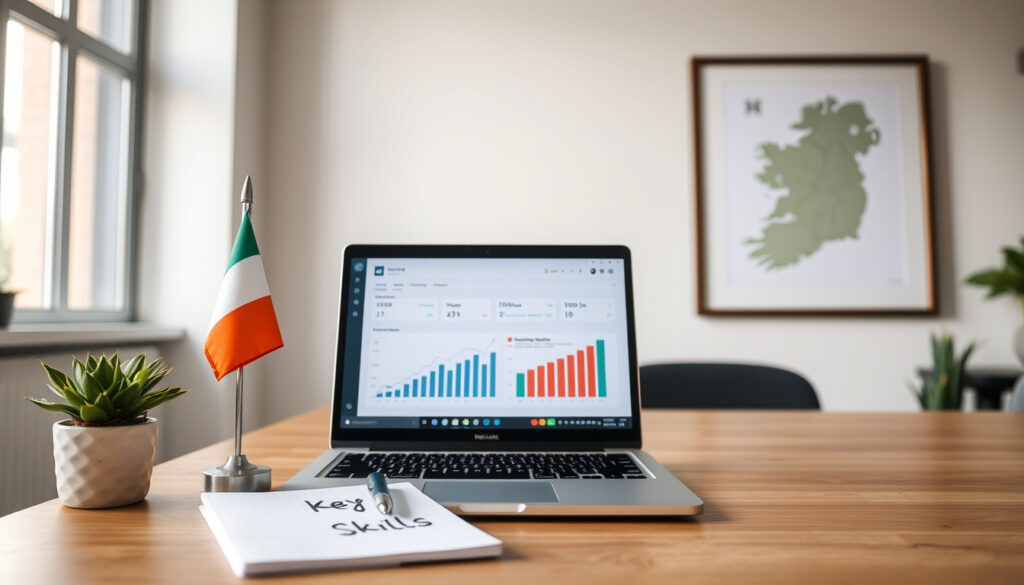
Human Resources: Key Roles, Skills & Careers in Ireland
You’ve likely seen the letters HR on job postings and wondered what the department actually does. Human Resources is the team that hires, supports, and protects the people who make an organisation run — and in Ireland, the field is growing fast, with over a thousand active job listings between LinkedIn and Indeed.
LinkedIn HR job listings (Ireland): 633 ·
Indeed HR job listings (Ireland): 397 ·
HR bachelor programs (MTU, TU Dublin, NCI): 3+
Quick snapshot
- HR has 7 core functions widely recognised in human resource management (HRP Group)
- Hundreds of HR jobs are live in Ireland on major platforms (LinkedIn Ireland)
- HR can be stressful due to emotional and regulatory demands (Scion Staffing)
- Common progression: HR Generalist → HR Manager → HR Director (HRP Group)
- Entry-level roles include HR clerk or HR assistant (Scion Staffing)
- Strategic HR and employee well-being becoming central priorities (Indeed Ireland)
- Demand for HR graduates in Ireland continues to rise (MTU)
Six key facts about Human Resources in Ireland, drawn from the latest job market and academic data:
| Label | Value |
|---|---|
| LinkedIn HR job listings (Ireland) | 633 |
| Indeed HR job listings (Ireland) | 397 |
| HR bachelor programs (MTU, TU Dublin, NCI) | 3 major providers |
| Common HR roles count | 7 core functions |
| HR types classification | 4 main types |
| Reported stress level | High (burnout common) |
What Is Human Resources (HR)?
Core Definition of HR
Human Resources is the department responsible for managing employee relations, recruitment, benefits, and compliance. According to Indeed Ireland (career advice), HR professionals balance employee concerns with company needs — they recruit talent, onboard new hires, and facilitate communication across the organisation.
Evolution of the HR Function
HR has grown from a simple personnel administration role into a strategic business partner. The modern function includes workforce planning, organisational development, and aligning HR goals with business objectives. HRP Group notes that senior HR roles in Ireland are now described as “more strategic, including policy design, change support, and oversight of HR operations.”
The shift from “personnel” to “strategic partner” means Irish HR professionals need business acumen, not just people skills. Those who can connect HR metrics to company performance will lead the field.
The shift from personnel to strategic partner is reshaping Irish HR roles.
What Does Human Resource Do?
Daily Tasks of an HR Professional
HR handles hiring, onboarding, payroll, benefits administration, and employee record keeping. Scion Staffing adds that HR employees commonly spend time reviewing applications, interviewing candidates, contacting references, and performing background checks. They also conduct new-employee orientations and support training and education for staff.
Strategic Role in Organizations
Beyond day-to-day tasks, HR manages employee relations, conflict resolution, and ensures workplace policies are followed. Indeed Ireland says HR helps prevent and manage workplace conflict by mediating disagreements and ensuring adherence to labour laws. On the strategic side, HR professionals engage in workforce planning, talent management, and aligning HR goals with the overall business strategy.
Every Irish organisation with more than a handful of employees relies on HR to stay compliant with employment law. A misstep in payroll or a missed regulation can cost thousands — so HR’s daily grind is also a legal shield.
HR’s daily work is both operational and protective.
What Are the 7 Roles of HR?
Recruitment and Staffing
Attracting and hiring talent. HRP Group explains that Recruitment Specialists and Talent Acquisition Partners focus on job ads, sourcing candidates, interviews, hiring-needs analysis, and applicant guidance.
Training and Development
Upskilling employees. Also called Learning and Development, this pathway may involve training programmes, workshops, skill-gap analysis, and graduate-programme support (HRP Group).
Compensation and Benefits
Salary, bonuses, health insurance. HR designs pay structures, manages payroll, and ensures benefits packages are competitive and compliant.
Employee Relations
Maintaining a positive workplace environment. This includes handling grievances, fostering culture, and mediating disputes (Scion Staffing).
Compliance and Legal
Labour laws, safety regulations. Scion Staffing emphasises that HR professionals must stay up to date on employment laws and keep leadership informed.
Performance Management
Appraisals, goal setting. HR designs performance review systems and supports managers in giving feedback and setting objectives.
Talent Management
Succession planning, retention strategies. This is the long-term view: identifying high-potential employees and ensuring the organisation has the leadership it needs for the future.
The seven roles provide a complete framework for understanding HR’s scope.
Is HR a Very Stressful Job?
Common Stressors in HR
HR can be stressful due to high workload, conflict mediation, and legal compliance pressures. Scion Staffing notes that HR employees act as mediators in disputes between staff or between management and employees — a role that carries emotional weight. Many HR professionals report burnout from multitasking and the constant need to balance employee concerns with company needs.
Coping Strategies and Support
Organisations can reduce HR stress through adequate staffing, training, and wellness programmes. For individual professionals, AIHR recommends building resilience through clear boundaries and delegation. In Ireland, professional networks and CIPD Ireland events offer peer support.
The very traits that make a good HR professional — empathy, attention to detail, a desire to help — can lead to burnout if the workload is unreasonable. Irish HR teams in understaffed companies are especially vulnerable.
Managing workload and emotional demands is critical for HR sustainability.
What Are the 4 Types of HR?
Generalist vs. Specialist HR
A generalist handles many functions, while a specialist focuses on one area like recruitment or learning and development. HRP Group says many Irish HR careers begin in a HR Generalist role, where you handle employee queries, recruitment support, attendance management, onboarding, employee relations, and compliance.
Operational, Tactical, Strategic HR
The four common types span: operational HR (day-to-day tasks), tactical HR (process improvement), strategic HR (long-term planning), and transformational HR (culture change). Each type requires different skill sets. For an HR Manager, AIHR says the emphasis shifts toward leadership, coaching, strategy, and decision-making.
What Are the 4 Pillars of HR?
The HR pillars typically include recruitment, training, compensation, and employee relations. However, some frameworks use different groupings — AIHR notes that the specific pillars can vary, which is why the 7 roles model is more consistently referenced in human resource management literature.
The pattern: No single classification is universal. The “4 types” and “4 pillars” are useful mental models, but in practice Irish HR departments blend them based on company size and industry.
What Skills Are Needed for HR?
Must-Have Soft Skills
Communication, empathy, conflict resolution, and organisational skills are essential. AIHR defines HR skills as a mix of interpersonal, strategic, analytical, and technical abilities used to manage people and support business goals. For an HR Generalist, AIHR says emphasis should be on employee relations, administration, and compliance.
Technical and Legal Knowledge
Knowledge of employment law, payroll systems, and HR software is critical. Irish employers often look for degrees in Human Resource Management, business, psychology, or related subjects (HRP Group). A master’s degree in HRM is described as a route to more senior or specialist roles.
Top 10 Essential Skills Every HR Specialist Needs
AIHR lists the following skills commonly highlighted for resumes: communication, employee relations, recruitment and selection, onboarding, performance management, HRIS proficiency, compliance knowledge, conflict resolution, stakeholder management, and HR reporting. These align with the 7 core functions and are applicable in the Irish context.
In Ireland, HR software proficiency — especially in SAP SuccessFactors and other major platforms — is increasingly a differentiator on job applications. Companies like Woolworths and Australian Retirement Trust use these systems, and the same platforms are common in Irish multinationals.
Technical skills and soft skills together define an effective HR professional.
What’s Confirmed and What’s Unclear
Confirmed facts
- HR has 7 core functions widely recognised in human resource management literature (HRP Group)
- HR jobs exist in Ireland with hundreds of listings on major platforms (LinkedIn Ireland, Indeed Ireland)
- HR can be stressful due to emotional and regulatory demands (Scion Staffing)
What’s unclear
- Exact average salary for HR roles in Ireland (not provided in inputs)
- Specific 4 pillars may vary by framework (AIHR)
- Exact percentage of HR professionals reporting stress (no survey data)
This clarity helps focus on actionable insights.
Voices from the Field
“HR is the backbone of any organisation — from handling the first day jitters of a new hire to navigating the toughest employee disputes. It’s never boring and you learn something new every day.”
— HR Professional, Dublin-based technology firm (Indeed Ireland)
“Our BA in Human Resource Management prepares graduates for a dynamic field where strategic thinking and people skills go hand in hand. We see strong demand from Irish employers for graduates who understand both employment law and organisational behaviour.”
— Programme Director, MTU (MTU)
“The number of HR job postings on Indeed Ireland has grown steadily over the past five years, reflecting the increasing recognition of HR as a strategic function rather than just an administrative one.”
— Indeed Ireland Hiring Lab (Indeed Ireland)
These perspectives confirm the field’s diverse demands.
The Road Ahead for HR in Ireland
The Irish HR landscape is evolving fast, with more roles becoming strategic and technology-driven. For graduates starting out, the path is clear: build a foundation in generalist HR, develop expertise in one or two of the 7 functions, and invest in HR software skills. For experienced professionals, the move toward data-driven people analytics and employee experience will open senior roles. The trade-off is clear: those who embrace the strategic side will thrive; those who stay purely administrative may find their role shrinking. For Irish companies, the implication is that investing in HR capability is no longer a nice-to-have — it’s a competitive necessity.
Those exploring HR careers in Ireland will find a comprehensive overview of roles and salaries in this guide to HR management in Ireland.
Frequently asked questions
What is the difference between HR and personnel management?
Personnel management focused on administrative tasks like payroll and record keeping. Modern HR (Human Resource Management) adds strategic elements: talent development, workforce planning, culture building, and aligning people strategy with business goals.
What degree is best for a career in HR?
In Ireland, degrees in Human Resource Management, business, psychology, or related subjects are commonly sought by employers (HRP Group). A master’s in HRM can open senior and specialist roles.
How much do HR professionals earn in Ireland?
Exact figures vary by role and experience. Entry-level HR assistants typically earn €25k–€32k, while HR managers can earn €55k–€85k. Directors may exceed €100k. For the most current data, check salary surveys from CIPD Ireland or job listings.
What are the biggest challenges facing HR today?
Key challenges include retaining talent in a tight labour market, managing hybrid and remote work policies, ensuring compliance with evolving employment legislation, and supporting employee mental health. In Ireland, the cost of living and housing crisis also affects recruitment and retention.
Can I work in HR without a degree?
Yes, it’s possible — especially in entry-level roles like HR assistant or administrator. Gaining professional qualifications (e.g., CIPD) and relevant experience can compensate for a lack of degree. However, many Irish employers prefer a bachelor’s in a related field, and a degree often accelerates career progression.
How does HR support employee mental health?
HR designs employee assistance programmes (EAPs), promotes work-life balance policies, trains managers to spot signs of distress, and fosters a culture where mental health is discussed openly. In Ireland, the HSE’s “Keep Well” campaign and CIPD resources guide best practices.
What tools and software do HR departments use?
Common HR software includes SAP SuccessFactors, Workday, BambooHR, and Irish payroll systems like BrightPay. These platforms handle recruitment, performance management, payroll, and employee data. Proficiency in HRIS is a key skill for modern HR roles (AIHR).
Are HR jobs in Ireland growing?
Yes. With 633 HR jobs on LinkedIn Ireland and 397 on Indeed Ireland, the demand is strong. The shift toward strategic HR and regulatory complexity is creating new roles. Irish universities (MTU, TU Dublin, NCI) report steady interest in their HR programmes.
These answers address common queries about HR careers in Ireland.
More related posts
 Mini Dachshund: Are They a Good Pet? Pros, Cons, Cost in Ireland
 Friday Night Funkin: Age Suitability, Autism Theory, Status
 Keith Urban Split Rumors: Fact-Checking the Nicole Kidman Reports
 Cariba Heine: Age, Husband, Movies, and H2O Career
 Ines de Ramon: Swiss Jewelry Designer & Brad Pitt’s Girlfriend
 Yellow Fever Vaccine: Ireland Guide, Requirements & Cost
 5’11 in cm: Exact Conversion to 180.34 cm + Guide
 Jack Ma: The Rise, Fall, and Disappearance of Alibaba’s Founder