How to Freeze Berries: Step-by-Step Guide for Smoothies & More
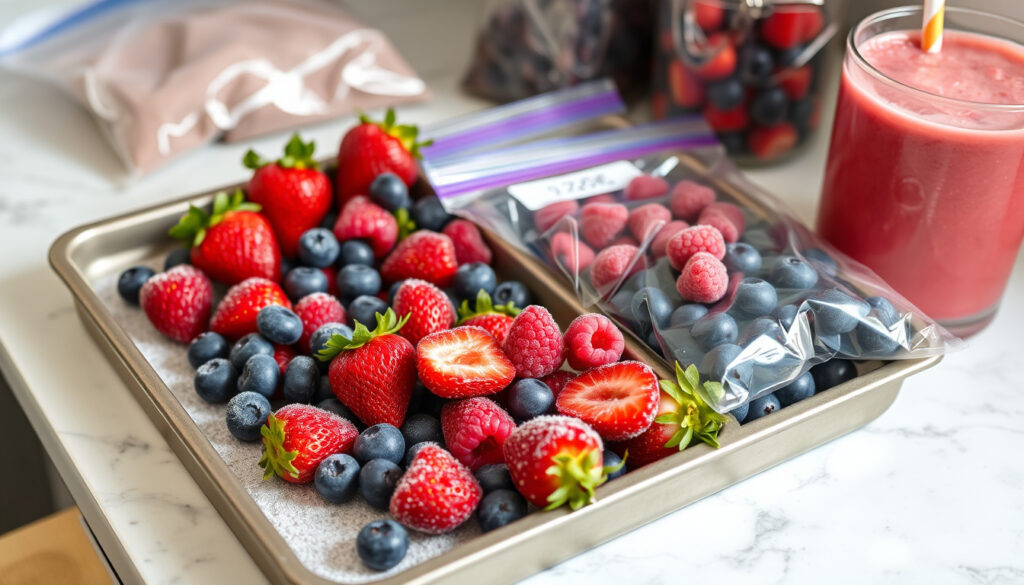
Summer berries hit their peak for just a few weeks each year. If you’ve ever grabbed one too many pints at the farmer’s market only to watch half of them turn soft before you could finish them, this one habit changes everything. The trick is to freeze them properly—no blanching required, no special equipment, just a baking sheet and a night in the coldest part of your freezer. A single layer on a parchment-lined sheet prevents clumping so berries pour out individually whenever you need them.
Optimal initial freeze time: overnight · Recommended storage method: airtight bags or containers · Prep step count: 4–5 steps · Shelf life frozen: up to 12 months · Tray freeze purpose: prevents clumping
Quick snapshot
- Tray flash freeze prevents clumping (The Cross Legacy)
- No blanching required for home freezing (WTOP food safety reporting)
- Freezer set to 0°F or below for optimal preservation (National Center for Home Food Preservation)
- Exact GERD impact varies by individual sensitivity
- Norovirus risk depends on batch contamination source
- Berries ready for smoothies straight from the freezer
- Year-round access to summer’s peak nutrition
The key facts table below summarizes essential parameters for successful berry freezing based on official guidelines and tested home methods.
| Factor | Detail |
|---|---|
| Standard prep | Wash, dry, tray freeze |
| Freeze time | Overnight initial |
| Storage life (regular bags) | 6–12 months |
| Optimal taste window | 6–8 months |
| Vacuum-sealed storage | 2–3 years |
| Key tool | Parchment-lined baking sheet |
| Freezer temperature | 0°F or below |
| Nutrient retention | Anthocyanins stable; 17% ascorbic acid loss max |
What are the best ways to freeze berries?
Home freezing works best with a simple prep-freeze-store sequence. Ripe, mature berries at peak freshness yield the best results, according to the National Center for Home Food Preservation. The process requires no special pretreatment—sugar syrups or blanching are unnecessary for smoothie-quality berries.
Preparation steps
- Wash berries gently under cold running water
- Pat completely dry with clean paper towels to prevent ice crystal formation
- Hull strawberries by removing green tops (blueberries, raspberries, and blackberries need no hulling)
- Slice larger berries to match the size of smaller ones for even blending
Flash freezing process
Spread berries in a single layer on a parchment-lined baking sheet—this prevents sticking during the initial freeze. Place the sheet in the coldest part of your freezer for 1 to 24 hours until berries are solid through. The Jeannie’s Tried and True Recipes recommends keeping your freezer at 0°F or below for optimal preservation. Thawing causes more nutrient loss than freezing and storage, according to Taylor & Francis research published in 2024.
Flash freezing locks in nutrients. The implication: blueberries show no significant anthocyanin loss during three months of frozen storage at -20°C, per peer-reviewed research from PMC. Potassium content stays at 100% regardless of freezing duration, per Global Resources Direct nutrient analysis.
Storage options
Transfer frozen berries to airtight freezer bags or containers. Regular freezer bags keep berries usable for 6 to 12 months; vacuum sealing extends that to 2 to 3 years, according to storage duration comparisons from The Cross Legacy. Label each container with contents and date. For peak taste, use within 6 to 8 months, per University of Maryland Extension.
How to freeze berries without blanching?
Blanching—boiling frozen fruit for 2 minutes then cooling—is a commercial practice recommended for pathogen risks, not a home requirement. The National Center for Home Food Preservation clarifies that freezing does not destroy enzymes or kill microorganisms completely, which is why sanitary handling matters more than blanching for home cooks.
Why skip blanching
For smoothies, blanching actually works against you. According to food safety analysis from WTOP, berries frozen without blanching retain more nutrients than blanched ones because heat degrades sensitive compounds. Research from Taylor & Francis shows 17% ascorbic acid loss in strawberries frozen at -20°C for six months but zero anthocyanin loss in the same period.
Direct tray method
- Rinse berries under cold water and drain well
- Pat dry thoroughly—this step is optional for smoothies but recommended to reduce ice crystals
- Spread in single layer on parchment-lined sheet
- Freeze until solid, then bag
Sanitary handling matters more than blanching for home freezing. Work with clean hands and equipment—the freezer slows microbes but doesn’t eliminate them.
The catch: blanching was popularized after the FDA announced a 2019 study on frozen berries linked to hepatitis A and norovirus. That study focused on commercial products, not home-frozen berries from trusted sources.
How to freeze berries for smoothies?
Smoothies are where flash-frozen berries shine—you can toss them directly into the blender without thawing. The University of Maryland Extension confirms no pretreatment like sugar is needed for smoothie berries.
Portioning tips
- Measure berries into single-serving portions before the initial freeze if you make smoothies regularly
- Small zip-top bags work well—one bag per smoothie means no measuring mid-blend
- For large families, use larger containers and scoop what you need
Preventing sticking
The parchment paper trick prevents berries from freezing into a solid mass. According to Pretty Simple Sweet food blog, lining your baking sheet with parchment eliminates the need to pry apart frozen clumps later. Flash freezing individual berries also preserves texture better than freezing them in a block.
Frozen berries go straight from freezer to blender. For smoothie-heavy households, pre-portioned bags save morning prep time and reduce food waste from forgotten fresh berries.
What this means: investing 10 minutes in proper prep today saves daily frustration. A well-frozen berry bag pours smoothly; a careless freeze means wrestling with a frozen clump that tears your zip-top bag.
How to freeze raspberries?
Raspberries require gentler handling than sturdier berries like blueberries. Their delicate structure makes single-layer freezing essential to prevent crushing.
Raspberry-specific prep
- Rinse raspberries very gently under cold water—they bruise easily
- Drain in a colander, then spread on a clean kitchen towel to air-dry
- Pick through to remove any damaged or moldy berries before freezing
- Handle as little as possible—each pass increases bruising risk
Freezer storage
The single-layer rule matters most for raspberries. Spread them on a parchment-lined sheet without overlap, freeze until solid, then transfer to freezer bags. According to A Oregon Cottage home preservation blog, a 24-hour initial freeze works well for delicate berries that need extra firmness before bagging.
The pattern: raspberries reward patience. A rushed freeze produces a compressed berry block; a careful single-layer freeze keeps each berry individually frozen and ready for smoothie drop-in.
How long can you freeze fresh berries?
Storage duration depends on your packaging method. Regular freezer bags maintain quality for 6 to 12 months; vacuum sealing extends that to 2 to 3 years, according to The Cross Legacy. For peak flavor, aim to use within 8 months.
Maximum duration
- Regular freezer bags: 6–12 months
- Vacuum-sealed bags: 2–3 years
- Optimal taste window: 6–8 months
Quality retention
Nutrient retention stays strong even at longer storage times. Research from PMC found no significant anthocyanin loss in blueberries during three months frozen at -20°C. The Global Resources Direct confirms freezing preserves 100% of mineral content like potassium.
The implication: your berries won’t go bad after 8 months—they’ll just lose some vitamin C brightness while keeping the anthocyanins that give them their color and antioxidant punch.
Confirmed facts
- Tray flash freeze prevents sticking
- No blanching required for home use
- Freezer temperature: 0°F or below
- Berries usable for 6–12 months in regular bags
- No anthocyanin loss in 3-month frozen storage
What’s unclear
- GERD impact varies by individual
- Norovirus risk depends on specific batch
Step-by-step guide
Five straightforward steps cover the complete freeze-and-store cycle for any berry type.
- Wash and dry: Rinse berries under cold water, then pat completely dry with paper towels. Excess moisture creates ice crystals that affect texture.
- Prep the berries: Hull strawberries. Leave blueberries, raspberries, and blackberries whole. Slice any oversized berries to match smaller ones for even blending.
- Flash freeze: Line a baking sheet with parchment paper. Spread berries in a single layer without overlap. Place in the coldest part of your freezer for at least 1 hour, up to 24 hours for firm results.
- Bag and label: Transfer frozen berries to airtight freezer bags. Squeeze out excess air. Label each bag with berry type and freeze date.
- Store properly: Keep bags at 0°F or below. Use within 6–8 months for best taste, or up to 12 months for acceptable quality. Vacuum-sealed bags extend storage to 2–3 years.
“Freezing is the answer! You can freeze any amount of berries and add the frozen berries to a freezer container until it’s full.”
“It’s best to cook frozen fruit for at least 2 minutes in boiling water and then cool it. It’s called blanching.”
— WTOP food safety reporting
Summer berries deserve better than a rushed afterthought. Whether you grow your own or stock up at the farmers market, a night of proper flash freezing transforms perishable fruit into year-round smoothie-ready ingredients. The process takes 10 minutes of active work; the payoff lasts 6 to 12 months.
For anyone who has stared down a fridge full of softening berries with guilt and regret, the solution is embarrassingly simple: wash, dry, tray, freeze, bag. No blanching, no special equipment, no excuse.
Related reading: meal prep containers · chicken and rice recipes
These no-blanching techniques for berries extend seamlessly to freezing mushrooms, helping maintain texture for year-round cooking and smoothies.
Frequently asked questions
Can you freeze your own berries?
Yes. Home-frozen berries work well for smoothies and baking. Wash, dry, flash freeze on parchment, then transfer to airtight bags. Use within 6–12 months for best quality. No blanching or sugar syrup needed.
What fruits should not be frozen?
Fruits with high water content that become mushy upon thawing include watermelon, oranges, and grapes. Berries, stone fruits, and tropical fruits like mango and banana freeze well and hold texture for smoothies.
Are blueberries good for GERD?
Blueberries are relatively low-acid compared to citrus fruits, making them a better choice for some people with GERD. However, individual triggers vary. Frozen blueberries retain the same nutritional profile as fresh ones.
Is frozen fruit good for norovirus?
Norovirus can survive freezing. The FDA issued warnings about commercial frozen berries after outbreak links. For home freezing, use berries from trusted sources and handle with clean equipment—freezing slows but doesn’t eliminate viral risks.
What is the one fruit you should always buy frozen?
Frozen mango offers year-round access to a fruit that spoils quickly when fresh. Frozen mango maintains nutrients well and costs less out of season. Blueberries purchased on sale and frozen at home follow the same logic.
Why do some doctors say not to eat blueberries?
Doctors may advise limiting blueberries for specific reasons: allergies, medication interactions (blueberries affect certain drugs), or personal triggers for digestive issues. For most people, blueberries are beneficial. Consult your healthcare provider about specific concerns.
What fruit will calm an upset stomach?
Bananas are often recommended for upset stomachs due to their easy digestibility. Frozen bananas work well in smoothies. Blueberries may aggravate sensitive stomachs due to their fiber content, but some find the tannins soothing.
More related posts
 Best Phone Case for Ireland: Top Picks & Buying Tips
 Bundaberg Man Lottery Winner: $10M Powerball & Second Win
 Alfred Hitchcock: Facts, Films, and the Real Man Behind the Myths
 James Brown: Life, Death, Legacy & Key Questions Answered
 Denham Hitchcock: Age, Wife, Father, and Career | Biography
 Roger Climpson, Veteran TV News Anchor, Dies at 93
 Lyle Menendez: Hair Loss, Wives, Parole Denial, and Prison Life
 Australia Pension Age Change 2026: Facts & Rates Explained